Category: LP tracks

Hammond Week 2010 #3 – Gene Ludwig – The Vamp / Well You Needn’t

By , March 4, 2010 4:38 pm

Example

Example

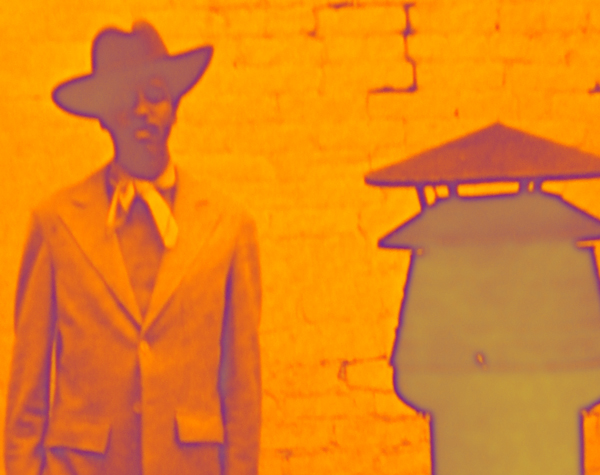
Gene and his porkpie hat contemplating the Hammond

Example

Listen/Download -Gene Ludwig – The Vamp

Listen/Download -Gene Ludwig – Well You Needn’t

Greetings all.

I hope the end of the week finds you well. I, on the other hand fell backwards through the front door of my house yesterday, landing flat on my back in a pile of toys. While my sons thought this was hilarious (I’m sure I would too if I’d observed it happening to someone else), I sit here feeling much like someone who fell backwards into a pile of toys, i.e. sore. I’m trying not to dwell on how much my own stupidity contributed to this accident. To do so would only make my back hurt more than it does.
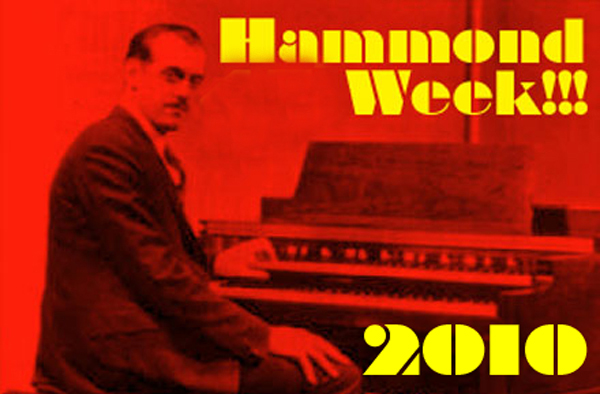
I’ve decided to close out Hammond Week 2010 with an old favorite by one of the true masters of the instrument, Mr. Gene Ludwig.
I was lucky enough to interview Mr. Ludwig a few years back, and when you get a second you should pop on over to the old Funky16Corners web zine to read up on the read ups.
The tune I bring you today is the very first Gene Ludwig record I ever heard, courtesy of my man Haim. Back in the day, when he still lived on this side of the country, Haim – aware of my Hammond addiction –  had a record that he simply had to play for me, and that record was ‘The Vamp’.
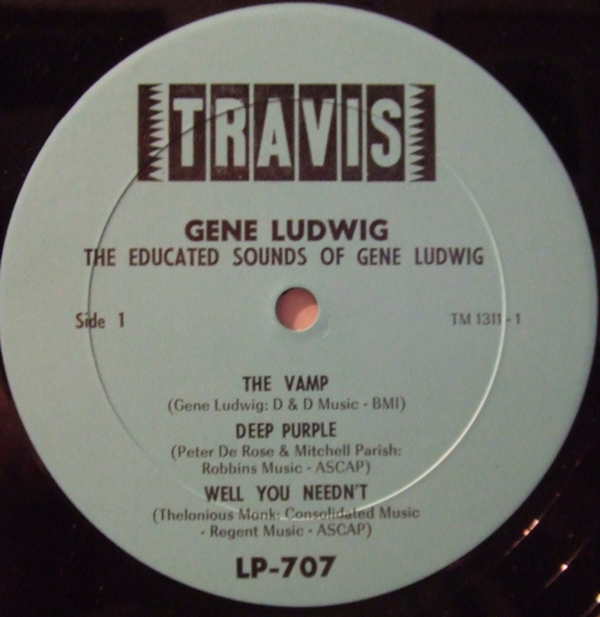
You all know what a nut I am for organ records, and as soon as the needle hit the wax on the Travis 45 of ‘The Vamp’ my hair pretty much stood on end. A fantastic showcase for Ludwig’s keyboard skills, ‘The Vamp’ is also something much more.
There, in its two minutes and thirty six seconds resides a perfect encapsulation of the meaning of soul jazz. Featuring Ludwig on the organ, Jerry Byrd on guitar and Randy Gillespie leaving his drums for a turn on the tambourine, ‘The Vamp’ (so named since it was basically built on a riff in the studio) moves at a fairly brisk pace, yet, thanks to the absence of the full drum set, manages to generate an air of relaxed cool.
The tune opens with Ludwig’s fingers flying all over the keys, with short, rhythmic chops by Byrd as Gillespie pulls his tambourine out of the amen corner and goes to town. It’s at the minute mark that the organ and guitar switch places, with Gene comping on the organ as the guitarist solos at length until Ludwig comes back in to restate the main theme just before the fade out.
There, in well under three minutes resides pure, 1965, smokey night club, jukebox perfection. Back in 2007 I included ‘The Vamp’ (recorded from the 45, this somewhat cleaner version coming from the LP ‘The Educated Sound of Gene Ludwig’) in Funky16Corners Radio v.24.5 ‘Old School Hammond’, but since not everyone that follows the blog was around back then, and more importantly, it’s such an amazing record, I figured that I ought to bring it back for this year’s week long celebration of the instrument.
I’m also including – from the same album – Gene’s take on my idol Thelonious Monk’s (in his time, a survivor over the long haul, much like Mr. Ludwig) ‘Well You Needn’t’. It gives you a chance to hear the master’s jazz chops as he and the group dig in for six and a half minutes of pure, listening pleasure.
I’m happy to say that Gene Ludwig – 73 years young – is still working it out on the Hammond in 2010, with a full slate of dates. Make sure you check out his website for samples of his (excellent) recent recordings, as well as videos* some recent performances.
I hope you’ve enjoyed this week’s selections, and I’ll be back next week with some funk.
Have a great weekend.

Peace

Larry

Example

*There’s a great version of Gene and his group playing one of my favorite soul jazz standards, Percy Mayfield’s ‘River’s Invitation’

Check out the Funky16Corners Store at Cafe Press

PS Head over to Iron Leg for some UK psych

PSS Check out Paperback Rider too.

PSSS Don’t forget to hit up Funky16Corners on Facebook

You can also follow Funky16Corners on Twitter

Hammond Week 2010 #2 – Lonnie Smith – Stand/Mama Wailer

By , March 2, 2010 5:01 pm

Example

Example

Lonnie Smith makes with the smokestack lightning…

Example

Listen/Download -Lonnie Smith – Stand

Listen/Download -Lonnie Smith – Mama Wailer

Greetings all.

I hope the middle of the week finds you better than me, at least in regard to your general health and well being. I am currently afflicted with some kind of upper respiratory infection that has rendered my throat sore, my body weak and slightly feverish and my general outlook on life at least temporarily grim. I know that this too shall pass, but it’s interfering with my ability to pack in a good night’s sleep, which is something I live for. If I don’t get my six hours in, I am a seriously crabby bastard, unfit to walk among the general population. I guess it’s fair to say that in the grand scheme of things I’m doing well. At least I don’t have the flu, and the wife and kids are healthy, so the Funky16Corners compound hasn’t gone into epidemic lockdown (yet) so I shall cease my grousing and do what I have been told I do best, which is lay some groovy sounds at your doorstep, stand back and feel the love.

Example

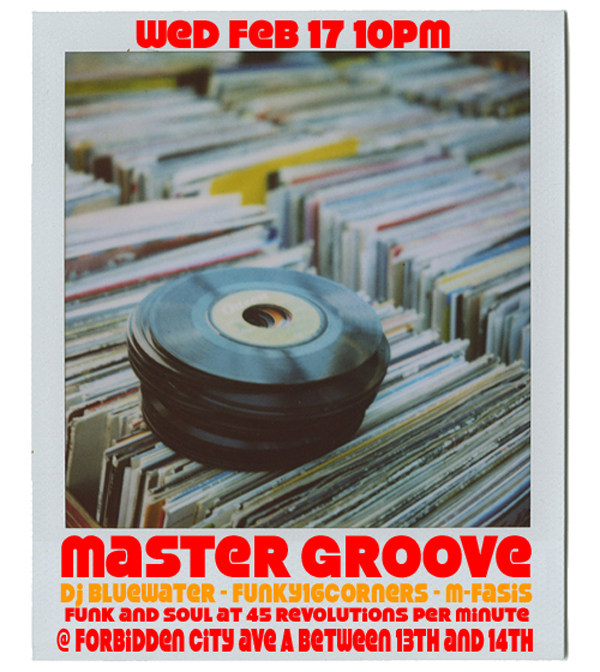
But, before I do that, I should mention that I will be returning to Master Groove @ Forbidden City, Wednesday the next, that being March the 10th for another evening of funk and soul spun at 45 revolutions per minute, along with DJ Bluewater and M-Fasis. I haven’t decided what kind of set I’ll be dropping this time, but I assure you that no matter what, it’ll be worth hearing.
It is in that spirit that I bring you something extra nice this fine day. If you thought that Monday’s nine-minute burner from Rhoda Scott was long-form, wait until you stuff your ears full of seventeen minutes worth of the mighty Lonnie Smith.
The good Doctor (as he has been known for many a year), be-turbaned and masterful upon the Hammond, has laid down a mountain of grooves since he made his first album in 1967. Combining serious jazz chops with an ability to work soul and funk grooves, Smith is one of my favorites.
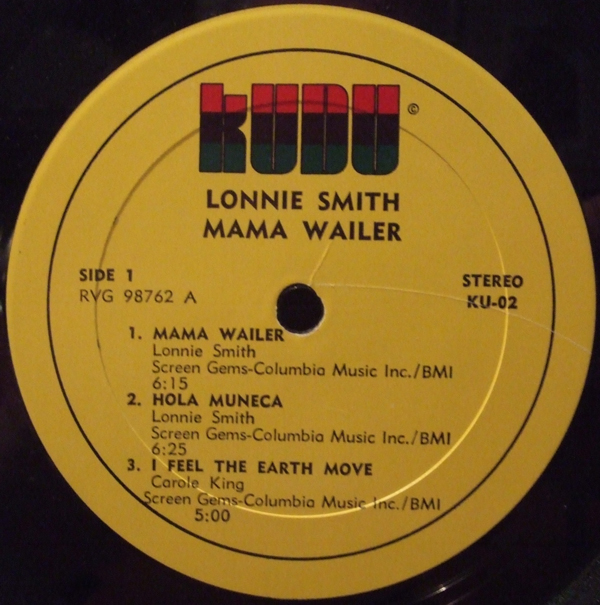
The track I bring you today is from his 1971 Kudu set ‘Mama Wailer’. I heard this record for the first time last year and when I did I set out to secure myself a copy post haste. While the whole album is worth hearing, the tracks I bring you today stand head and shoulders above the rest.
Sly and the Family Stone hit the charts with the original version of ‘Stand’ in 1969. One of their finest records, it was a perfect blend of funky soul and an era-specific, uplifting message. When Dr. Smith got his hands on the cut, he and his band (Ron Carter, Billy Cobham and Grover Washington Jr. among others) took the feeling of the original for the basic framework and then stepped off the edge of the world into a whole new, extremely far out place, located somewhere on the corner of Out and Psychedelic. The really interesting thing about Smith’s version of ‘Stand’ is that he steps outside of a standard presentation, flies off into the ether and never really comes back to earth. Things just get freakier and freakier, and the theme is never actually restated. By the time you get to the run of groove (the track occupies and entire LP side) it’s possible that you’ve forgotten what song you were listening to in the first place.
Though I often sing the praises of the power of a three-minute 45, there’s something to be said for musicians taking the time to stretch. Years back I was having a discussion with someone that should have known better, who was expressing his befuddlement about a jazz record (something fairly conventional, if memory serves) wherein most of the tracks sailed well past the eight-to-ten minute mark. He didn’t get how, or why someone would play for that long, i.e. what could they say in ten minutes that couldn’t be said just as well in three. At the time, I whipped out the eye-roll to beat all eye-rolls and tried to explain, but words failed me, and in the spirit of comity I decided to back off and fight again another day.
That day is here.
When you settle in and warm your ears up for a track as long as Lonnie Smith’s reading of ‘Stand’, it’s a whole different thing from getting the short, sharp blast of a 45. Though the form had been abused many a time by pretentious rockers (and jazzers of the same ilk), the longer track, when done well is a thing of beauty. Sometimes you get the standard modern jazz reading, with statement/restatement of the theme followed by each member of the band (piano, horns, bass, drums etc.) soloing in turn. Other times, like in today’s selection, you get a little of that, mixed in with a little of a freer feel. Smith’s cover of ‘Stand’ manages to do this, and – in the spirit of the original – edging over into a rockish vibe as well. No matter how jazzy, there’s no denying that things get a little psychedelic in the second half of the record.
If that’s too far out for even you adventurous types, I’m also including – as a bonus track of sorts – the title track of the LP. ‘Mama Wailer’ has a nice Latin groove, moving along at a very groovy pace. The Hammond takes a back seat, with Smith working mostly on clavinet and at just over six minutes, it’s a much easier to digest portion.
I hope you dig both tracks, and I’ll be back on Friday with some more of the good stuff.

Peace

Larry

Example

Check out the Funky16Corners Store at Cafe Press

PS Head over to Iron Leg for some interesting Millennium covers


PSS Check out Paperback Rider too.

PSSS Don’t forget to hit up Funky16Corners on Facebook

You can also follow Funky16Corners on Twitter


Hammond Week 2010 Pt1 – Rhoda Scott Trio – Sha Bazz

By , February 28, 2010 6:39 pm

Example

Example

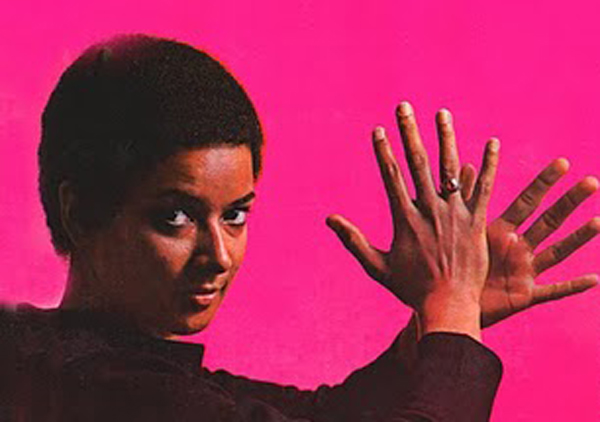
Miss Rhoda Scott

Example

Listen/Download -Rhoda Scott Trio – Sha Bazz


Greetings all.

As I sit here, just having come in from dragging an overloaded garbage can through the slush to its appointed spot (in another pile of slush), in the hopes that the garbage man will grace us with his presence so we don’t have to resort to an unfortunate system of indoor composting and burning garbage in the fireplace, I am temporarily chilled to the bone. Though we were spared the threatened snow disaster, it’s cold like the devil’s underpants out there. This winter has gone from bad to worse, and we now have several strata of dirty snow covering another layer of frozen mud in our front yard. The winter wonderland has morphed into a post-apocalyptic wasteland in a few short months, and we, the helpless observers are reduced to huddling by the fire, praying for spring.
It is in that spirit, and the knowledge that many of you are so afflicted, that I attempt to warm the surrounding environment with an entire week of Hammond organ burners.
Before I get started, I’d like to send out good wishes and congratulations to DJ Birdman and his lovely wife, who are the proud parents of a bouncing baby boy! If I know one thing for sure, in addition to parents that love him, that kid will grow up in a house full of good music (much like my own children).
The last time I did this, a little over a year ago, I figured it would become an ongoing series. I didn’t know it’d take me an entire year to get back to it.
The good thing it, that in the ensuing time I have amassed quite a stack of heaters to choose from, so much so that picking only three of them proved to be a daunting task.
The tune I bring you today is a fairly recent acquisition, the result of a chance sighting on a set sale list.
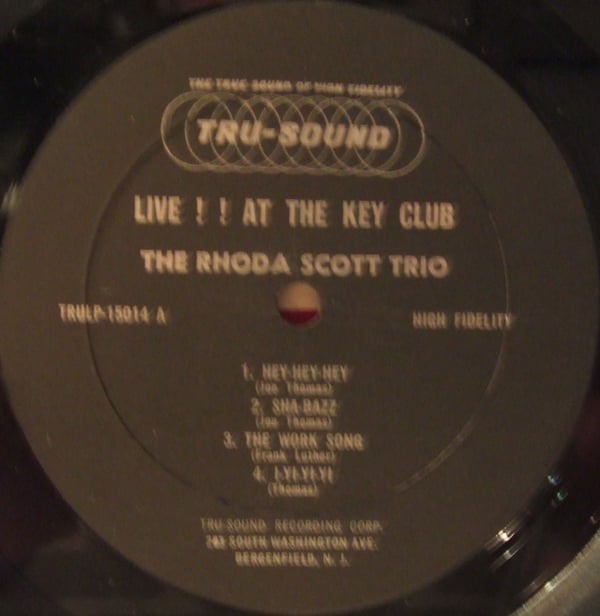
One of my favorite Hammond 45s is ‘Hey Hey Hey’ by the Rhoda Scott Trio. Picked up years ago while digging, its deep in the club, party time spirit never fails to give me a lift. In the years since I found that 45, I’ve always kept my eyes peeled for other stuff by Miss Scott, and was thwarted until I found the album featuring today’s selection.
Rhoda Scott, a native of my home state of New Jersey is one of the leading lights of that very exclusive sorority of female Hammond organists, along with Shirley Scott (no relation) and Bu Pleasant. She got her start playing in and around New York and New Jersey, before relocating to France in the mid-1960s (where she continues to play today).
The tune I bring you today ‘Sha Bazz’ is from her 1963 LP ‘The Rhoda Scott Trio Live!!! at the Key Club’. I bought this album pretty much blind, mainly on the strength of the fact that it was on the same label as ‘Hey Hey Hey’. I had no idea – until I started to do some research – that Tru-Sound was in fact a subsidiary of the Prestige label.
When the record fell through the mail slot, and I had the opportunity to drop the needle on the wax, I was in a word (or two), blown away.
Scott’s trio at the time consisted of multi-instrumentalist Joe Thomas (who has appeared in the space before on his main axe, the flute) and drummer Bill Elliot. ‘Live at the Key Club’ is evidence that they were wholly capable of kicking ass.
‘Sha Bazz’, which starts out with a mix of drums and chanting quickly evolves into a showcase for Scott’s mastery of the Hammond, building into a nine-minute plus crash course on the power of the instrument. ‘Sha Bazz’ is pure heat, with Scott’s organ in overdrive and extended solos by Thomas and Elliot.
I know I’ve made this allusion before (and I probably will again) but it sounds like Scott is straining the ability of the board (or the tape) to contain the sound coming out of the Hammond. You listen to this record and imagine some unsuspecting person strolling into the club, seeing the petite woman at the organ, ordering some old school cocktail (Rusty Nail anyone?) and then, before you know what happened it’s all KA-BLAMMM! And your hair is all mussed, and your glasses are on crooked and your drink is all over your pants and you look like one of those astronauts in a rocket sled with your face all peeled back and your eyes all bugged out.

Know what I’m saying???
It’s records like this that make me wish I could step into the Wa-Bac machine (props to Mr Peabody and Sherman) and go back to any number of inner city bars in the 60s where players like Rhoda Scott were burning the joint up with small groups like this, perfectly bridging the gap between jazz, rhythm and blues and the oncoming freight train known as soul. The really groovy thing – especially for organ nuts like myself – is that Shirley Scott was (and is) adept at running bass lines on the Hammond’s foot pedals, making the trio sound like a much larger group.
I remember reading an interview with Jimmy Smith more than 20 years ago (maybe in Musician?) where he basically said, if you weren’t able to work those bass pedals, you weren’t really playing the Hammond. If you want to hear a great example of this – albeit in a much rawer context – check out Toussaint McCall’s ‘Shimmy’. There, in a 45 that is all but exploding with sound, you have only an organist and a drummer, where once again the organist is doing the work of two, operating the top and bottom ends of the Hammond. That’s musicianship.
Heavy stuff indeed, baby.
Dig it and I’ll be back on Wednesday with more of the same.

Peace

Larry

Example

Check out the Funky16Corners Store at Cafe Press

PS Head over to Iron Leg for some interesting Millennium covers


PSS Check out Paperback Rider too.

PSSS Don’t forget to hit up Funky16Corners on Facebook

You can also follow Funky16Corners on Twitter


Funky16Corners Radio v.81 – The Piano Electrified

By , February 14, 2010 3:55 pm

Example

Funky16Corners Radio v.81 – The Piano Electrified

Playlist

Eddie Harris – Listen Here (Atlantic)
Herbie Hancock – Fat Albert Rotunda (WB)
Art Jerry Miller – Finger Lickin’ Good (Enterprise)
Pete Jolly – Prairie Road (A&M)
Mose Allison – Meadows (Atlantic)
Lonnie Liston Smith & the Cosmic Echoes – Voodoo Woman (Flying Dutchman)
Hampton Hawes – J.B.’s Mind (Prestige)
Bob James – Nautilus (CTI)
Larry Willis – 153rd St Theme (Groove Merchant)
Neal Creque – D Train (Cobblestone)
Deodato – September 13 (CTI)
Les McCann and Eddie Harris – Shorty Rides Again (Atlantic)
Ramsey Lewis – Living For the City (CBS)


To hear this mix, head over to the Funky16Corners Radio Podcast Archive


Greetings all.

I hope reentry into the seven day cycle finds you all well.
I have just about recovered from all the snow-related exertion, and if we get another storm anytime soon I’m going to hunt down Mother Nature and kick her in the ass.
It is in the spirit of relaxation (though not too relaxed) that I bring you another in the recently mounted series of instrumental focus mixes, this time out a very tasty hour-long (plus) excursion into the world of the electric piano.
The electric piano – specifically the Fender Rhodes, though there are a couple of different brands/models represented here – is, like the vibes in F16Rv.79, one of my all time favorite sounds. Say what you want about the structure/genre of any kind of music, but when you boil it down, there’s something about the way a specific instrument sounds, whether it’s the vibes, electric piano, string bass, oud, flute, what have you, that gets deep inside my head and drills down into my pleasure centers on a primal, vibrational level, to the point where an immersive exercise like the one you see before you is the only prescription.
This has a lot to do with growing up around the piano. My Pop plays, and it was his second job for all of my childhood. If my love of music has a specific source, it’s because I grew up with a pianist/singer in the house. Whether it was on the out of tune upright at my Grandma’s house, the baby grand he entertained on at my wedding, or the electric keyboard he has now, my Dad has always instilled the value of a good (great) song in all of his children (which is why most of them play instruments).
I’ve been wanting to get down to working on this particular mix for a long time, but it was only in the last couple of weeks that I set foot in the record room – which is starting to outgrow its current location – and set to digging out the prime electric piano specimens in my crates.
While there is a funky edge to the majority of the selections herein, there are a couple of mellower things where you really get to hear the dreamy, chiming side of the instrument.
Things get underway with a song that is both a certifiable soul jazz standard, but also an oddity of sorts. Eddie Harris, who appears twice in this mix, but just once on the piano, is best known as a sax man, primarily as the number one proponent of another favorite sound of mine, that being the Varitone electric saxophone. The 1966 album ‘Mean Greens’, from which ‘Listen Here’ originates, is unusual because it includes an entire side on which Harris puts down the sax and works it out on electric piano and organ. Though Harris wasn’t giving any of the past masters of the keyboard anything to worry about, he acquits himself nicely on ‘Listen Here’, building a nice groove against a percussion base.
Herbie Hancock lays down a serious groove on the title track from 1969’s ‘Fat Albert Rotunda’. Featuring Hancock and a band of serious jazz heads (like Joe Henderson and Albert ‘Tootie’ Heath) ‘Fat Albert Rotunda’ (the song and the album) is a landmark of sorts, with the pianist settling into the funk for the first time.
Art Jerry Miller is one of those cats where I wish I could get more than a few, tantalizing clues about his story. He was Memphis-based, wrote for an played with Willie Mitchell, and recorded one very groovy album for the Stax subsidiary Enterprise Records in 1969. ‘Finger Lickin’ Good’ is a classic of the three o’clock in the morning mood, and sounds like a distant cousin of King Curtis’ ‘Soul Serenade’.
Pete Jolly was a serious West Coast jazz pianist and studio musician who recorded steadily from the 50s to the 90s. ‘Prairie Road’ is a cut from his 1970 album ‘Seasons’, which was improvised and recorded in a single four-hour session. The album is sought out for the sample on ‘Plummer Park’, but I’m here to tell you that in addition to ‘Prairie Road’ – which is included here – you really need to get your hands on the entire album (in OG or reissue) because it is one sweet listen.
Mose Allison has long been a favorite of mine, but it wasn’t until last summer, when I was down in DC digging, that DJ Birdman hepped me to the album ‘Western Man’, the only one on which the mighty Mose ever played the electric piano. I finally found myself a copy last month, and it’s both amazing, and a little bit sad that Allison didn’t spend more time working in a similar groove. The mellow tune ‘Meadows’ is included here.
I remember a time when I didn’t know that Lonnie Smith (the Hammond cat) and Lonnie Liston Smith were two different people. It wasn’t until I picked up a couple of his early 70s Flying Dutchman albums that I got hip. Lonnie Liston Smith was a busy sideman (with Miles Davis among others) who broke off in the early 70s to make his own brand of spiritual fusion. ‘Voodoo Woman’ is from his 1974 ‘Expansion’ album, and while it gets off to a funky start, it quickly settles into a late night, quiet storm groove.
Hampton Hawes first made his mark as a hard bop pianist in 1950s Los Angeles. By the early 70s he had moved on to electric piano, and a funkier sound. ‘J.B.’s Mind’ is from his 1972 album ‘Universe’, and manages to whip a little bit of funk into the mix, alongside some serious jazz sounds from Oscar Brashear and Harold Land.
Bob James is known to most people as the man behind the theme to ‘Taxi’, but ask any crate digger, and they’ll let you in on the breakbeats that make his early 70s albums on CTI/Tappan Zee favorites. The most prominent of these comes toward the end of the tune included in this mix, ‘Nautilus’ from 1974’s ‘One’ album (break courtesy of Idris Muhammad).
Larry Willis is a journeyman jazz keyboardist who has played in a wide variety of settings since the 60s (including an early 70s stint in Blood Sweat and Tears!). ‘153rd St Theme’ is a cut from his 1973 Groove Merchant album ‘Inner Crisis’.
Neal Creque has appeared in this space before, in his capacity as sideman for both Grant Green (he wrote Green’s epic ‘Cease the Bombing’) and Mongo Santamaria. He was a versatile keyboardist, working on both piano and organ. His 1972 ‘Contrast’ LP for Cobblestone is a lost classic, with funk, jazz and just a touch of his roots in the Virgin Islands. ‘D Train’ is one of the funkier numbers on the album.
Eumir Deodato, one of Brazil’s most successful musical exports is responsible for the biggest hit CTI records ever had, his reworking of ‘Also Sprach Zarathustra’ aka ‘2001’ which was a Top 10 hit around the world in 1973. The heavily sampled ‘September 13’ is another cut from the ‘Prelude’ album.
Les McCann and Eddie Harris were both jazz veterans when they hit the charts with their live, 1969 recording of Gene McDaniel’s ‘Compared To What’ which appeared on the ‘Swiss Movement’ LP. They reunited in 1971 for the album ‘Second Movement’, which featured the tune included in this mix, the funky, oft sampled ‘Shorty Rides Again’.
No mix focusing on the electric piano would be complete without a contribution from the mighty Ramsey Lewis. Lewis verily wrote the book on soul jazz piano in the 60s, and carrid on making huge contributions to jazz funk in the 70s. His 1974 ‘Sun Goddess’ album was one of his biggest hits, and in addition to his regular trio members (including Cadet house drummer Morris Jennings), the album also featured contributions from several members of Earth Wind and Fire. We close out this edition of the Funky16Corners Radio thang with his extremely cool cover of Stevie Wonder’s ‘Living For the City’.
I hope you dig the mix, and I’ll be back later in the week.
Also, if you’re in or around NYC this Wednesday, I’ll be back spinning with DJ Bluewater and M-Fasis at Master Groove @ Forbidden City, Ave A between 13th and 14th Sts. If I can get my shit (and records) together it’ll be an all Northern Soul set, so fall by if you’re in the area (things get underway at 10PM).

Example

Peace

Larry

Example

Check out the Funky16Corners Store at Cafe Press


PPS – Make sure to fall by Iron Leg for an Easy Zombies cover.

PPPS Make sure to hit up Funky16Corners on Facebook

Disco/Not Disco Pt2 – Eddie Kendricks – Girl You Need A Change of Mind

By , February 9, 2010 5:47 pm

Example

Example

Eddie Kendricks

Example

Listen/Download – Eddie Kendricks – Girl You Need a Change of Mind

Greetings all.
As I write this, I still can’t feel the lower right side of my face, having spent the morning with the dentist and her assistant rummaging in my mouth like it was an old sofa and they’d lost a hundred dollar bill. I even got soup for lunch and STILL managed to bite my lip. Fortunately, the good doctor informs me that aside from an extraction, my dental worries for the year are at an end (until next year and the insurance starts paying again).
A look out the window at the foot or so of snow on the lawn is bad enough, but the weatherman is now forecasting another foot or so for tonight into tomorrow. Once again I ask, WTF? I don’t mind the weather as much as I’m terrified of venturing out onto the roads, alongside the large number of New Jersey residents who have no idea how to drive in the snow. Half of them are going way too slow, and the other half, cruising around in their gas sucking luxury behemoths are going way too fast, thus making the NJ highways – already a gauntlet of sorts – into a veritable death trap. With any luck, the wife and kids will have the day off, so we can stay home and sit beside the fire.
That said, it’s time to continue our week long tribute to David Mancuso and the records he played at the Loft.
Earlier this week, not long after I finished writing the post about Booker T & the MGs, it occurred to me that the vibe I got when reading about Mancuso, and his work as a DJ reminded me of a phrase I learned from a friend many years ago.
Back in the day, though (wisely) I never set foot on a surfboard, I became fascinated with the history of the sport – especially the big wave riders – and I had a couple of friends (thanks to living and working by the beach) who actually surfed. Now, the “waves” (quotes added for sarcasm) at the Jersey Shore rarely rise above a height considered safe for small children and old ladies (aside from those whipped up by the occasional Nor’Easter or hurricane). Despite this fact, no matter what time of year it is, if I take a ride along the beach –especially in the morning – there are surfers out there, making the best of what the ocean has to offer.
Why do I mention this? Because, (also) back in the day, my buddy Joe introduced me to the concept of the ‘soul surfer’. Obvious puns aside, what this refers to is an individual who is technically adept enough to compete with the big dogs, yet rides the waves solely for the sheer pleasure of it, making it into a spiritual endeavor. The more I thought about Mancuso, the Loft and the ideas he brought to the game (and how he inspired me) the more it occurred to me that it made sense to apply that term to Mancuso and those that follow(ed) in his footsteps.
I realize that there are all kinds of DJs out there, separated not only by genre, but also by their approach to spinning (though god knows the cats that actually use records are becoming an endangered species). Ideally, when you enter the DJ booth, your ultimate goal ought to be that the folks dancing, listening or both, have a good time. How good a time they have is dependent on a number of factors, the most important being the quality of the music, and the way you (the DJ) present it to the crowd.
The corner of the musical universe I tend to kick around in is generally concerned with soul and funk, of the vintage persuasion. The folks that come to hear and dance to this music are usually a mix of aficionados, i.e. your Mods and soulies that know their way around and are probably already acquainted with some of the rarer discs in my record box, and regular folks who just want to hear something they can dance to.
It probably goes without saying (but I’ll say it anyway) that the vast majority of DJs in this field are – like myself – what our friends in the UK refer to as anoraks and trainspotters, i.e. detail-oriented obsessives with an eye turned to the rare an obscure. The duty of this type of DJ is to balance their own love for the obscure against the true quality of the records in question (on account of the rarity of a record often- not always – has an inverse relation to the quality), and to offer up a playlist that is interesting, but ultimately satisfying to the largest possible number of people. Finding this balance isn’t always easy. I’ve seen people with incredible record collections step up to the tables and drop one ultra-rare stinkbomb after another. I’ve also seen people with less impressive crates (but spectacular taste) light up a dancefloor with dollar bin wonders.
Today’s selection from the Loft, Eddie Kendricks’ mighty ‘Girl You Need a Change of Mind’ is from the less-obscure end of the spectrum. The song appeared on Kendricks’ landmark 1972 LP ‘People Hold On’, and though it wasn’t a hit*, he was well known from his years in the Temptations, and had scored a chart hit with that album’s opening track ‘If You Let Me’. Like Monday’s tune ‘Melting Pot’, I first heard ‘Girl You Need a Change of Mind’ as a 45 edit. Unlike ‘Melting Pot’, ‘Girl…’ made an impact on me, even in its shortened version.
Written by Motown legend Frank Wilson and Anita Poree (though the 45 credits it to Poree and ex-Radiant Leonard Caston, who co-wrote a number of other songs on ‘People Hold On’), ‘Girl You Need a Change of Mind’ is the ultimate illustration of the ‘disco/not disco’ tag.
Eddie Kendricks is unquestionably one of the fathers of what came to be known as disco. The two years after ‘People Hold On’ saw him have big hits with two of the genre’s important early songs, ‘Keep On Truckin’ and ‘Boogie Down’. While ‘Girl…’ isn’t quite as explicitly “disco” as either of those tracks, all of the stylistic cues are present, albeit not fully formed. Like ‘Melting Pot’, ‘Girl…’ contains multitudes in its seven and a half minute span. Though it works wonders as a three and a half minute soul single, it passes over into the realm of dance floor epic in the album version.
The opening riff, with a simple piano riff over spare percussion – soon joined by snare drum and horn flourishes, opens up into a relatively slow (yet danceable) verse. It’s around the two and a half minute mark, with Kendricks repeated ‘What you say to that?’ refrain, that the tempo escalates, backed by a muscular rhythm guitar (right about where the 45 version fades out). Things change again around 3:45, where everything except the lead guitar and tambourine drop out, the band gradually coming back in (the piano and rhythm guitar are especially sweet here) until the drums come in strong at about 5:10. It’s at this point where the picture of ‘Girl You Need a Change of Mind’ as dance floor epic comes into full focus. Unlike many 12” singles that would drop in the coming years, ‘Girl…’ is both song enough for the radio, and (in it’s LP form) long enough for the dancers.
Things change yet again at 5:55 – and again this must have been absolutely magical over the Loft’s sound system – as we’re left with just the congas and Kendrick’s falsetto, followed in short order by the band returning to full power by the end of the record (sounding – at this stage – several years ahead of its time).
Interestingly enough, as proto-disco goes, it’s another ‘People Hold On’ track, ‘Date With the Rain’ – another big hit in the clubs that failed to score on the radio – a remarkable (but tragically short, at 2:40) dance record, that more closely fits the mold. It is also available (but much rarer) on 45.
I hope you dig the track(s), and I’ll be back on Friday with another great record.

Peace

Larry

Example

*CORRECTION – I just dug out my Billboard R&B Chart book, and discovered that ‘Girl You Need a Change of Mind Pt1’ (the 45 edit)  was in fact a Top 20 R&B hit.

PS: Don’t forget this Wed 2/10 at Master Groove @ Forbidden City – DJ BlueWater, DJ Prime Mundo, DJ Prestige

Check out the Funky16Corners Store at Cafe Press


PS Head over to Iron Leg for something by the Beach Boys

PSS Check out Paperback Rider too.

PSSS Don’t forget to hit up Funky16Corners on Facebook

You can also follow Funky16Corners on Twitter

Disco/Not Disco Pt1 – Booker T & the MGs – Melting Pot

By , February 7, 2010 6:24 pm

Example

Example

Booker T and the MGs

Example

Listen/Download – Booker T & the MGs – Melting Pot

Greetings all.
I hope that those of you located in the path of the big snowstorm are well, shoveled out and warm. Unlike the last time storm, during which my snowblower was locked in the tool shed, its get up and go having got up and went, the most crucial of snow battling machines was up and running this time, making for a much neater, much less labor intensive experience. There’s still a shit-stack of the white stuff surrounding the Funky16Corners compound, but ingress and egress are assured.
This week is another one of those Funky16Corners ‘theme’ extravaganzas, in which I dip into the vault and run a Sesame Street – ‘How are these things like one another’ – game on you, but provide you with the answers (or at least my version thereof).
Last year, one of my major reading experiences was Tim Lawrence’s book “Love Saves the Day: A History of American Dance Music Culture, 1970-1979”. Lawrence’s tome, along with Peter Shapiro’s ‘Turn the Beat Around: The Secret History of Disco’ (since retitled) and Bill Brewster and Frank Broughton’s ‘Last Night a DJ Saved My Life’ when taken together form a de fact encyclopedia of modern DJ culture. All three are well written and deeply informative, but more than that, they introduce you to a couple of seminal personalities without whom DJ-ing (and dance music) would not exist as it does today.
Because of these three books, I came away with a deep and abiding respect (bordering on idolatry) for the work of David Mancuso. It was Mancuso (pictured above), who in 1970 threw the first dance party in his loft (which became The Loft), calling it Love Saves the Day (get it? Nudge, nudge say no more…). Though there were many other important figures in DJ culture (especially Francis Grasso who paved the way for Mancuso in New York City), for me, Mancuso rises above all others.
From the very first time I entered a DJ booth, I’ve endeavored to create an experience for the people on the dance floor turning solely on the gears of good music. Some of it was rare, some of it extremely common, but the idea was to drop the needle on something that the dancers would dig, and do my best to lift the room. Years later, when I became aware of Mancuso through the books listed above I realized that he was in many ways the ur-DJ.
If you’ve spun records for a crowd, you already know (or should) that nothing feels better than laying down some quality sounds and feeling the energy on the dance floor build, incrementally, layering record on top of record, shifting the tempo up (most of the time anyway) but always attempting to build on that increase with a parallel increase in the quality of the music coming out of the speakers. There’s something to be said for the idea that on a perfect night, a DJ is something akin to the ancient cats drumming around the fire, whipping their fellow tribesmen into a lather, drumming harder as they dance faster until the lot of them were participants in a musical hive mind of sorts, connected by the beat. When you’re spinning records, sometimes it only comes together for a couple of songs, sometimes not at all, but when it does there’s nothing better. Certainly the vast majority of people in a dance club are there first and foremost to have a good time, but there’s no reason in the best of all possible worlds that it can’t also be elevated to the spiritual level.
Before you can get to that specific place, a DJ has to do two fundamental things.
First and foremost, keep your ears (and your mind) open. The more you listen to, and the more time you spend among others that really know and seek out good music the larger your internal repertoire/reference library is going to be.
Second, and if you’ve spent any time following the going on here at Funky16Corners you probably picked up on this one: keep digging. The more time you spend actively seeking out new music in the field, the more likely it is that when the time comes to pull some heat out of your crates and drop it on the ones and twos that you’ll be making a good choice.
Certainly there’s the issue of taste, but even that can be improved with enough study.
That all said, what I came away from all three of those books knowing about David Mancuso, was that his tastes were expansive. A look at his playlists reveals that alongside many accepted classics (many of those placed in the canon by Mancuso and his contemporaries) there were a lot of – for lack of a better term – ‘unusual’ choices. Half a decade before guys like Kool Herc and Flash were cutting rock breaks in the Bronx, Mancuso was playing all manner of rock, jazz, world music and pop sounds at the Loft, alongside a healthy portion of what are now considered ‘consensus’ dance records.
Remember, we’re talking about an era where the large majority of genres that rule the dance club world today hadn’t yet been codified. ‘Disco’ was years away from common usage and 12” singles – with their dance floor specific extended versions – did not yet exist. Though there were some records on his playlists that are now considered part of the vanguard of what would come to be known as disco (especially some Eddie Kendricks jams, one of which will be featured later this week), Mancuso mixed in just about anything else that made sense in the context of his sets.
The Loft parties, though conceived on an intimate scale, were hugely influential, with regular attendees/devotees including Nicky Siano (the Gallery), Larry Levan (Paradise Garage) and Frankie Knuckles (the Warehouse, from which ‘house’ music got its name) all of whom went on to marks on dance music culture in their own ways.
The first track I’m going to bring you this week is a perfect (capsule) example of all that was great about the Loft. Oddly enough, the first time I heard Booker T and the MGs doing ‘Melting Pot’ it was on a 45, with the vast majority of its power stripped away. After reading about its place of honor at the Loft, I sought out the 1971 LP of the same name. I finally scored a copy when I was DJing down in DC last year. Once I got it home and had a chance to drop the needle on the LP version of the title song, it became obvious why Mancuso used it at the Loft.
‘Melting Pot’ is, inside of its eight minute playing time, a microcosm of an entire set. The song opens with rimshots by Al Jackson, but it’s Steve Cropper’s pulsing rhythm guitar that sets the pace. When Booker T’s organ and Jackson’s drums come in the groove is locked down. The band – one of the tightest of the classic soul era – only really works up a full head of steam at the three minute mark, which explains why the 45 lacks the punch of the LP version.
It’s important to note the atmosphere in which the ‘Melting Pot’ album was created. It was the last album by the classic MGs lineup. Booker T Jones was fed up with the new regime at Stax and was on the verge of leaving the group. He refused to record in Memphis, so the album was recorded on the road in NYC. The sound of the album is a serious departure from the band’s earlier work, revealing a more expansive, more progressive Booker T and the MGs. While tracks like ‘Chicken Pox’ – with the MGs channeling the Meters – show that they might not have been leading the pack anymore, a cut like ‘Melting Pot’ shows that had they stayed together, they might very well have moved to the front once again.
As I mentioned before, ‘Melting Pot’ is almost like a small, self-contained DJ set. The song has several distinct sections in which the MGs bring up the tempo gradually, hit a peak and then chill out, only to re-state the groove again and again, bringing the dancers along for the ride. Listen at around 4:15 where Jones and Duck Dunn fall back, leaving Jackson and Cropper to rebuild the song from the opening statement. Dunn drops back in with a repeated, almost circular bass line, and Jones solos over the top of it all. I can only imagine what Al Jackson’s punchy bass drum accents sounded like pouring out of the Loft’s sound system. While ‘Melting Pot’ is clearly not ‘disco’ as it came to be known, the second half of the song is definitely a prototype for extended dance mixes to come. The temptation, as the song fades out just past the eight minute mark, is to cue up a second copy and keep the groove going.
‘Melting Pot’ which was the last 45 by the classic Booker T and the MGs line up, and strangely enough the flip side is another drastically truncated long jam,’Kinda Easy Like’ which also runs over eight minutes on the LP. It grazed the Pop Top 40 and hit the R&B Top 20. Following the ‘Melting Pot’ album, Booker T Jones would leave the group and relocate to California where he would work with artists like Bill Withers. Cropper would also leave the fold, with Dunn and Jackson reconstituting the MGs with a new organist and guitarist.
All in all, ‘Melting Pot’ is – at least for those that haven’t heard it – a revelation, and a great way to start a week of Loft tracks.
I hope you dig it, and I’ll be back on Wednesday with something cool.

Peace

Larry

Example

PS: Don’t forget this Wed 2/10 at Master Groove @ Forbidden City – DJ BlueWater, DJ Prime Mundo, DJ Prestige

Check out the Funky16Corners Store at Cafe Press


PS Head over to Iron Leg for something by the Beach Boys

PSS Check out Paperback Rider too.

PSSS Don’t forget to hit up Funky16Corners on Facebook

You can also follow Funky16Corners on Twitter

Panorama Theme by Themocracy