Category: The Loft

David Mancuso 1944 – 2016

By , November 15, 2016 10:57 am

Example

Greetings all

Yesterday evening word started to get out that one of the true originators of DJ culture and founder of the Loft, David Mancuso had passed away at the age of 72.

Mancuso’s is a name that does not elicit a great deal of pop culture recognition these days, but if you are a DJ, student of the culture, or one of the people lucky enough to have experienced any of his NY-based Loft parties, in the 70s or beyond, it is one that demands respect.

To call David Mancuso a DJ is an acceptable shorthand (because in the most superficial way, that’s what he was) but a careful examination reveals that he was much more than that.

These days, if you call someone a DJ, it has a number of meanings, from the guy trying to get people to do the hokey pokey at a wedding, hardcore collectors/selectors in a wide variety of genres, and all the way up to the electronica selectors playing music for tens of thousands of people at a time around the world.

Mancuso has some tenuous connection to all of them, but was in essence something much deeper, closer to a musical conjurer/shaman than anything else.

He started The Loft in 1970 (though he had been doing something similar periodically since 1965) as a series of rent parties, based around his love of music and his devotion to presenting it via high end, audiophile sound. He used the music, the sound system, and a variety of environmental enhancements (up to and including drugs, it was no coincidence that the first part was called ‘Love Saves The Day’ – dig the initials).

That he did all of this in the days when the DJ equipment we take for granted existed only in primitive forms (if it existed at all), and that he presented it all through the gateway of his particular, expansive, inclusive (in all ways) sensibility is what made it special.

I first read about Mancuso in Bill Brewster and Frank Broughton’s essential tome ‘Last Night a DJ Saved My Life’ in 1999, and I was entranced by his ideas about what kind of music to put together, how to present it (he barely mixed his records, if ever), and especially the sounds on his playlists.

Today, it would be unthinkable for a club DJ to play records all the way through, and then not mixing/beatmatching. Mancuso would play long, dynamically diverse records, filled with highs and lows in energy and volume, emphasizing his belief in the power of the musis, as opposed to lashing himself to the shortened attention span of a crowd and pushing them along.

He played soul, funk (there wasn’t any real ‘disco’ to speak of when he started), rock, world music, sound effects, all assembled to create a mood and take a crowd into his embrace, lifting them up, and placing them down gently.

In an interview with Red Bull Music Academy, Mancuso described it thusly:

From the beginning, your parties were designed to bring people together.

I was very frustrated. A lot of times I wouldn’t enjoy things about going to certain places, from the soundsystem to the door policy. I was able to prevent that, and by having a certain way of doing things, we promoted social progress.

To this day, there’s no dress code. There’s no age control. You don’t have a liquor license. Once you have the different economical groups mixed together, the social progress starts to kick in. You have people from all walks of life coming together.

The music also had a lot of crossover. We had all kinds of music being played, from one end of spectrum to the other, and people found out that, “Hey, I like Led Zeppelin and I like James Brown.”

People just want to have a good time. They want to feel safe and have a good time. That’s always rule number one for a place, to be safe. But it’s more than not just doing things like overcrowding, it extends all the way down to protecting the ears.

After reading about Mancuso, and exploring the kinds of records he played (many of which were new to me), I always tried to emulate him. I rarely got to DJ the kind of nights he did, but even playing a straight up soul or funk night, I always try to take chances, and to grab a crowd and lift it like he did.

And really, any DJ, in any style or setting ought to carry that simple formula in the back of their mind.

The world is full of DJs that can hammer a crowd with a steady BPM and a list of guaranteed crowd pleasers, but having been on both sides of the DJ booth, I can attest to the fact that there is nothing better than being genuinely, pleasantly surprised by a DJ who simply focuses on good music, sequencing obscurities (high and low dollar), with classics and mixing in things from the margins of (or only peripherally related to) a genre in a way that fills you with joy and makes you want to get up and dance.

Because that, and only that, is what it should be all about.

If you want to go into a club and floss your record collection for the heads in the crowd, with no regard for whether or not they’re going to make anybody dance (or at least smile), then don’t call yourself a DJ.

I have been fortunate enough, over the years to have been given the opportunity to spin at gigs (especially the Asbury Park 45 Sessions) where I was allowed some degree of latitude in what I played, and I’m proud to say that I took chances whenever I could, always with the spirit of David Mancuso, and the Loft in air.

Today’s post is composed of a series from 2010 called ‘Disco Not Disco’, where I spent a week taking about Mancuso and exploring a couple of his signature records, by Booker T and the MGs, Eddie Kendricks, and Cymande.

I will return later in the week with a few more things, including a repost of a Mancuso-inspired mix from 2014, and a special edition of the Funky16Corners Radio Show (dedicated to Mancuso and the Loft)  this Friday.

So read up on your read ups, pull down the ones and zeros, and remember that love does indeed save the day.

Keep the faith

Larry

__________________________________________________________

Example

Example

Booker T and the MGs

Example


Listen/Download – Booker T and the MGs – Melting Pot MP3

Greetings all.

This week is another one of those Funky16Corners ‘theme’ extravaganzas, in which I dip into the vault and run a Sesame Street – ‘How are these things like one another’ – game on you, but provide you with the answers (or at least my version thereof).

Last year, one of my major reading experiences was Tim Lawrence’s book “Love Saves the Day: A History of American Dance Music Culture, 1970-1979”. Lawrence’s tome, along with Peter Shapiro’s ‘Turn the Beat Around: The Secret History of Disco’ (since retitled) and Bill Brewster and Frank Broughton’s ‘Last Night a DJ Saved My Life’ when taken together form a de fact encyclopedia of modern DJ culture. All three are well written and deeply informative, but more than that, they introduce you to a couple of seminal personalities without whom DJ-ing (and dance music) would not exist as it does today.

Because of these three books, I came away with a deep and abiding respect (bordering on idolatry) for the work of David Mancuso. It was Mancuso (pictured above), who in 1970 threw the first dance party in his loft (which became The Loft), calling it Love Saves the Day (get it? Nudge, nudge say no more…). Though there were many other important figures in DJ culture (especially Francis Grasso who paved the way for Mancuso in New York City), for me, Mancuso rises above all others.

From the very first time I entered a DJ booth, I’ve endeavored to create an experience for the people on the dance floor turning solely on the gears of good music. Some of it was rare, some of it extremely common, but the idea was to drop the needle on something that the dancers would dig, and do my best to lift the room. Years later, when I became aware of Mancuso through the books listed above I realized that he was in many ways the ur-DJ.

If you’ve spun records for a crowd, you already know (or should) that nothing feels better than laying down some quality sounds and feeling the energy on the dance floor build, incrementally, layering record on top of record, shifting the tempo up (most of the time anyway) but always attempting to build on that increase with a parallel increase in the quality of the music coming out of the speakers. There’s something to be said for the idea that on a perfect night, a DJ is something akin to the ancient cats drumming around the fire, whipping their fellow tribesmen into a lather, drumming harder as they dance faster until the lot of them were participants in a musical hive mind of sorts, connected by the beat. When you’re spinning records, sometimes it only comes together for a couple of songs, sometimes not at all, but when it does there’s nothing better.

Certainly the vast majority of people in a dance club are there first and foremost to have a good time, but there’s no reason in the best of all possible worlds that it can’t also be elevated to the spiritual level.

Before you can get to that specific place, a DJ has to do two fundamental things.

First and foremost, keep your ears (and your mind) open. The more you listen to, and the more time you spend among others that really know and seek out good music the larger your internal repertoire/reference library is going to be.

Second, and if you’ve spent any time following the going on here at Funky16Corners you probably picked up on this one: keep digging. The more time you spend actively seeking out new music in the field, the more likely it is that when the time comes to pull some heat out of your crates and drop it on the ones and twos that you’ll be making a good choice.

Certainly there’s the issue of taste, but even that can be improved with enough study.

That all said, what I came away from all three of those books knowing about David Mancuso, was that his tastes were expansive. A look at his playlists reveals that alongside many accepted classics (many of those placed in the canon by Mancuso and his contemporaries) there were a lot of – for lack of a better term – ‘unusual’ choices. Half a decade before guys like Kool Herc and Flash were cutting rock breaks in the Bronx, Mancuso was playing all manner of rock, jazz, world music and pop sounds at the Loft, alongside a healthy portion of what are now considered ‘consensus’ dance records.

Remember, we’re talking about an era where the large majority of genres that rule the dance club world today hadn’t yet been codified. ‘Disco’ was years away from common usage and 12” singles – with their dance floor specific extended versions – did not yet exist. Though there were some records on his playlists that are now considered part of the vanguard of what would come to be known as disco (especially some Eddie Kendricks jams, one of which will be featured later this week), Mancuso mixed in just about anything else that made sense in the context of his sets.
The Loft parties, though conceived on an intimate scale, were hugely influential, with regular attendees/devotees including Nicky Siano (the Gallery), Larry Levan (Paradise Garage) and Frankie Knuckles (the Warehouse, from which ‘house’ music got its name) all of whom went on to marks on dance music culture in their own ways.

The first track I’m going to bring you this week is a perfect (capsule) example of all that was great about the Loft. Oddly enough, the first time I heard Booker T and the MGs doing ‘Melting Pot’ it was on a 45, with the vast majority of its power stripped away. After reading about its place of honor at the Loft, I sought out the 1971 LP of the same name. I finally scored a copy when I was DJing down in DC last year. Once I got it home and had a chance to drop the needle on the LP version of the title song, it became obvious why Mancuso used it at the Loft.

‘Melting Pot’ is, inside of its eight minute playing time, a microcosm of an entire set. The song opens with rimshots by Al Jackson, but it’s Steve Cropper’s pulsing rhythm guitar that sets the pace. When Booker T’s organ and Jackson’s drums come in the groove is locked down. The band – one of the tightest of the classic soul era – only really works up a full head of steam at the three minute mark, which explains why the 45 lacks the punch of the LP version.

It’s important to note the atmosphere in which the ‘Melting Pot’ album was created. It was the last album by the classic MGs lineup. Booker T Jones was fed up with the new regime at Stax and was on the verge of leaving the group. He refused to record in Memphis, so the album was recorded on the road in NYC. The sound of the album is a serious departure from the band’s earlier work, revealing a more expansive, more progressive Booker T and the MGs. While tracks like ‘Chicken Pox’ – with the MGs channeling the Meters – show that they might not have been leading the pack anymore, a cut like ‘Melting Pot’ shows that had they stayed together, they might very well have moved to the front once again.

As I mentioned before, ‘Melting Pot’ is almost like a small, self-contained DJ set. The song has several distinct sections in which the MGs bring up the tempo gradually, hit a peak and then chill out, only to re-state the groove again and again, bringing the dancers along for the ride. Listen at around 4:15 where Jones and Duck Dunn fall back, leaving Jackson and Cropper to rebuild the song from the opening statement. Dunn drops back in with a repeated, almost circular bass line, and Jones solos over the top of it all. I can only imagine what Al Jackson’s punchy bass drum accents sounded like pouring out of the Loft’s sound system. While ‘Melting Pot’ is clearly not ‘disco’ as it came to be known, the second half of the song is definitely a prototype for extended dance mixes to come. The temptation, as the song fades out just past the eight minute mark, is to cue up a second copy and keep the groove going.

‘Melting Pot’ which was the last 45 by the classic Booker T and the MGs line up, and strangely enough the flip side is another drastically truncated long jam,’Kinda Easy Like’ which also runs over eight minutes on the LP. It grazed the Pop Top 40 and hit the R&B Top 20. Following the ‘Melting Pot’ album, Booker T Jones would leave the group and relocate to California where he would work with artists like Bill Withers.

Cropper would also leave the fold, with Dunn and Jackson reconstituting the MGs with a new organist and guitarist.

All in all, ‘Melting Pot’ is – at least for those that haven’t heard it – a revelation, and a great way to start a week of Loft tracks.
_____________________________________________________________________________________

Example

Eddie Kendricks

Example


Listen/Download – Eddie Kendricks – Girl You Need a Change of Mind MP3

Greetings all.
It’s time to continue our week long tribute to David Mancuso and the records he played at the Loft.

Earlier this week, not long after I finished writing the post about Booker T & the MGs, it occurred to me that the vibe I got when reading about Mancuso, and his work as a DJ reminded me of a phrase I learned from a friend many years ago.

Back in the day, though (wisely) I never set foot on a surfboard, I became fascinated with the history of the sport – especially the big wave riders – and I had a couple of friends (thanks to living and working by the beach) who actually surfed. Now, the “waves” (quotes added for sarcasm) at the Jersey Shore rarely rise above a height considered safe for small children and old ladies (aside from those whipped up by the occasional Nor’Easter or hurricane). Despite this fact, no matter what time of year it is, if I take a ride along the beach –especially in the morning – there are surfers out there, making the best of what the ocean has to offer.

Why do I mention this? Because, (also) back in the day, my buddy Joe introduced me to the concept of the ‘soul surfer’. Obvious puns aside, what this refers to is an individual who is technically adept enough to compete with the big dogs, yet rides the waves solely for the sheer pleasure of it, making it into a spiritual endeavor. The more I thought about Mancuso, the Loft and the ideas he brought to the game (and how he inspired me) the more it occurred to me that it made sense to apply that term to Mancuso and those that follow(ed) in his footsteps.
I realize that there are all kinds of DJs out there, separated not only by genre, but also by their approach to spinning (though god knows the cats that actually use records are becoming an endangered species). Ideally, when you enter the DJ booth, your ultimate goal ought to be that the folks dancing, listening or both, have a good time. How good a time they have is dependent on a number of factors, the most important being the quality of the music, and the way you (the DJ) present it to the crowd.

The corner of the musical universe I tend to kick around in is generally concerned with soul and funk, of the vintage persuasion. The folks that come to hear and dance to this music are usually a mix of aficionados, i.e. your Mods and soulies that know their way around and are probably already acquainted with some of the rarer discs in my record box, and regular folks who just want to hear something they can dance to.

It probably goes without saying (but I’ll say it anyway) that the vast majority of DJs in this field are – like myself – what our friends in the UK refer to as anoraks and trainspotters, i.e. detail-oriented obsessives with an eye turned to the rare an obscure. The duty of this type of DJ is to balance their own love for the obscure against the true quality of the records in question (on account of the rarity of a record often- not always – has an inverse relation to the quality), and to offer up a playlist that is interesting, but ultimately satisfying to the largest possible number of people. Finding this balance isn’t always easy. I’ve seen people with incredible record collections step up to the tables and drop one ultra-rare stinkbomb after another. I’ve also seen people with less impressive crates (but spectacular taste) light up a dancefloor with dollar bin wonders.

Today’s selection from the Loft, Eddie Kendricks’ mighty ‘Girl You Need a Change of Mind’ is from the less-obscure end of the spectrum. The song appeared on Kendricks’ landmark 1972 LP ‘People Hold On’ (the 45 version was a Top 20 R&B hit). Kendricks was well known from his years in the Temptations, and had scored a chart hit with that album’s opening track ‘If You Let Me’. Like Monday’s tune ‘Melting Pot’, I first heard ‘Girl You Need a Change of Mind’ as a 45 edit. Unlike ‘Melting Pot’, ‘Girl…’ made an impact on me, even in its shortened version.

Written by Motown legend Frank Wilson and Anita Poree (though the 45 credits it to Poree and ex-Radiant Leonard Caston, who co-wrote a number of other songs on ‘People Hold On’), ‘Girl You Need a Change of Mind’ is the ultimate illustration of the ‘disco/not disco’ tag.

Eddie Kendricks is unquestionably one of the fathers of what came to be known as disco. The two years after ‘People Hold On’ saw him have big hits with two of the genre’s important early songs, ‘Keep On Truckin’ and ‘Boogie Down’. While ‘Girl…’ isn’t quite as explicitly “disco” as either of those tracks, all of the stylistic cues are present, albeit not fully formed. Like ‘Melting Pot’, ‘Girl…’ contains multitudes in its seven and a half minute span. Though it works wonders as a three and a half minute soul single, it passes over into the realm of dance floor epic in the album version.

The opening riff, with a simple piano riff over spare percussion – soon joined by snare drum and horn flourishes, opens up into a relatively slow (yet danceable) verse. It’s around the two and a half minute mark, with Kendricks repeated ‘What you say to that?’ refrain, that the tempo escalates, backed by a muscular rhythm guitar (right about where the 45 version fades out). Things change again around 3:45, where everything except the lead guitar and tambourine drop out, the band gradually coming back in (the piano and rhythm guitar are especially sweet here) until the drums come in strong at about 5:10. It’s at this point where the picture of ‘Girl You Need a Change of Mind’ as dance floor epic comes into full focus. Unlike many 12” singles that would drop in the coming years, ‘Girl…’ is both song enough for the radio, and (in it’s LP form) long enough for the dancers.

Things change yet again at 5:55 – and again this must have been absolutely magical over the Loft’s sound system – as we’re left with just the congas and Kendrick’s falsetto, followed in short order by the band returning to full power by the end of the record (sounding – at this stage – several years ahead of its time).

Interestingly enough, as proto-disco goes, it’s another ‘People Hold On’ track, ‘Date With the Rain’ – another big hit in the clubs that failed to score on the radio – a remarkable (but tragically short, at 2:40) dance record, that more closely fits the mold. It is also available (but much rarer) on 45.
___________________________________________________________________________________________

Example

Cymande

Example


Listen/Download – Cymande – Bra MP3

Greetings all.

The end of the week is here, and so is the final installment in the ‘Disco/Not Disco’ series.
It’s been interesting – at least for me – in that this is something that I’d been wanting to do for a long time, and kept putting it off until I had enough time to give it the thought it deserved.
The original intent was to present a couple of what I considered to be representative tracks from David Mancuso’s Loft repertoire, so that those of you reading, who may not have heard of him before might go a little bit further and as they say, read up on your read ups. Check any and all of the books I mentioned: Tim Lawrence’s book “Love Saves the Day: A History of American Dance Music Culture, 1970-1979”. Lawrence’s tome, along with Peter Shapiro’s ‘Turn the Beat Around: The Secret History of Disco’ (since retitled) and Bill Brewster and Frank Broughton’s ‘Last Night a DJ Saved My Life’ for a comprehensive history of club DJs, including Mancuso and his NY scene contemporaries.

The third and last song of the week is perhaps the most challenging of the three selections.

I’ve written about Cymande (a band I love a lot) in this space before.

Though they never rose to the prominence of either Booker T & the MGs or Eddie Kendricks, Cymande did hit the charts here in the US, twice in 1973. First with ‘The Message’, a Top 20 R&B hit, and then again (and for the last time) with today’s selection ‘Bra’ which hovered outside the R&B Top 50. They did make it onto the outer reaches of the Pop charts, but nothing significant, which is shame because they definitely had crossover potential.

Earlier I suggested that ‘Bra’ was the most challenging of this weeks selections. I don’t mean to suggest that it was in any way far out, but rather that its off-center groove, with stop time interplay between the percussion and the bass, with a less than ‘straight ahead’ rhythm. It’s not that I can’t imagine people getting down to ‘Bra’, but it’s definitely the kind of record that dancers might have to warm to, gradually, as opposed to a stereotypical floor-filler.

And therein lies the rub my friends, because that’s precisely the kind of chance that Mancuso would take, i.e. pulling an LP out of the crates and dropping a track – like ‘Bra’ – that while unquestionably danceable, is as valuable a listening experience as it is for dancing.

Co-written by guitarist Pat Patterson and bassist Steve Scipio, ‘Bra’ does open with rhythmically unusual riff – backed up by the song’s signature horn riff – but by the time the chorus comes in, the addition of a strong rhythm guitar propels the beat, rounding its sharp edges and settling into a more conventional groove. This is not to say that the tune loses any of its complexity, but rather, like any dozen James Brown records, the polyrythms are woven together so tightly that even someone with two left feet would be compelled to move.

The first time I had a chance to listen to Cymande’s three album discography in depth (via an old CD comp) what I got out of the experience – aside from lots of quality music – was the impression that despite the group’s marginal chart success, the listening public really missed the boat. The old saw is to indicate that an artist was ‘ahead of their time’ but in the case of Cymande I wouldn’t say that this was entirely true. This is how I described their music when writing about this track almost exactly three years ago:

“Their music was a sophisticated mixture of American soul and funk, African pop, Latin sounds, rock and all of the various and sundry intersections of those sounds. A close listen to their first LP is like a drive through Harlem in the early 70’s with your car windows down, letting snatches of Curtis Mayfield, Jimi Hendrix, Miles Davis, Stevie Wonder, Santana and a thousand lesser groups (woven securely into the fabric, but essentially lost to the ages) drift through the windows and into your ears.
There are elements of early-70’s prog-cum-stoner rock guitar, hard drums, jazzy bass and horns as well as a bedrock of polyrhythmic percussion.”

If my approximation of their sound is accurate, the conclusion you would reach is that they were very much of their time, and looking back, it seems amazing to me that they weren’t more popular. There were plenty of black acts incorporating elements of rock music into their sound, and by and large, though there are Jamaican influences (which had been popping in and out of radio playlists for much of the previous decade), they never overpower the band’s funky groove. While it’s understandable that a pop audience might not get too far into their sound, I’m puzzled that they didn’t make more inroads with the more progressive rock audience.

That said, placed against the other tracks in this week’s series, it’s ot hard at all to see why ‘Bra’ was so popular at the Loft. Earlier this week one of the readers requested that I post a Mancuso set list, so I pulled out ‘Love Saves the Day’ an retyped the list below, which doesn’t seem to represent any one night, but rather an amalgam of Loft favorites for the years 1970 to 1973. There are a fair amount of what one might consider to be ‘obvious’ dance records (James Brown, Beginning of the End, Manu Dibango*), a couple of less obvious tunes for the trainspotters, including jazz rock like Traffic’s ‘Glad’ and Brian Auger and the Trinity’s version of Eddie Harris’ soul jazz classic ‘Listen Here’, the breakbeat fave ‘The Mexican’ by Babe Ruth, as well as unusual (likely transitional, mood pieces) like the Beatles’ ‘Here Comes the Sun’ and Exuma’s ‘Exuma the Obeah Man’. While there’s a fair amount of info out there listing individual records as ‘Loft favorites’ I was unable to find any specific playlists from the venue’s early 70s heyday.

Interestingly enough, Mancuso has kept some version of his Loft going (at a number of different locations) continuously (though with decreasing frequency) right on through the disco and house music eras. He still travels internationally, putting on Loft parties around the world.

If reading in-depth studies of dance music culture isn’t your bag, see if you can track down the 2003 documentary ‘Maestro’, that follows the development of New York DJ culture from Francis Grasso in the late 60s, all the way through to the end of the Paradise Garage (with Larry Levan) in 1987.

It manages to touch on most of the major players, and there are lots of interviews with people that witnessed the development of DJ/club culture while it happened.

The Loft – Selected Discography 1970 – 1973
From ‘Love Saves the Day’ by Tim Lawrence
Brian Auger & the Trinity – Listen Here
Babe Ruth – The Mexican
Barrabas – Wild Safari
Barrabas – Woman
The Beatles – Here Comes the Sun
Beginning of the End – Funky Nassau
Booker T & the MGs – Melting Pot
James Brown – Get Up I Feel Like Being a Sex Machine Pt1&2
James Brown – Give It Up Or Turnit a Loose
Chakachas – Jungle Fever
Cymande – Bra
Manu Dibango – Soul Makossa
Equals – Black Skinned Blue Eyed Boys
Exuma – Exuma the Obeah Man
Aretha Franklin – Ain’t No Way
Al Green – Love and Happiness
Willie Hutch – Brother’s Gonna Work It Out
Intruders – I’ll Always Love My Mama
JBs – Gimme Some More
Eddie Kendricks – Girl You Need a Change of Mind
Morgana King – A Taste of Honey
Gladys Knight & the Pips – It’s Time To Go Now
Little Sister – You’re the One
Curtis Mayfield – Move On Up
Dorothy Morrison – Rain
Van Morrison – Astral Weeks
O’Jays – Love Train
Olatunji – Drums of Passion
Osibisa – Survival
Edwin Starr – War
Traffic – Glad
Tribe – Koke
Troubadours du Roi Baudouin – Missa Luba
War – City, Country, City
War – The World Is a Ghetto

Funky16Corners Presents: The Sound of the Drum

By , April 15, 2014 7:19 pm

Example


Nina Simone – Seeline Woman (Philips) / Dorothy Morrison – Rain (Elektra) / Paul Jones – Not Before Time (Bell) / Titanic – Sultana (Epic) / Candido – Jingo (Salsoul) / Doc Severinson – Footprints of the Giant (edit) (Command) / Dixie Cups – Two Way Poc A Way (ABC) / Area Code 615 – Stone Fox Chase (Polydor) / Quartette Tres Bien – Boss Tres Bien (Decca) / Booker T and the MGs – Melting Pot (Stax) / The Peddlers – Impressions Pt1 (Philips) / Sly Stone – Rock Dirge (Woodcock) / Fatback – Going To See My Baby (Perception) / Brother Jack McDuff – Hunk of Funk (Blue Note) / Manu Dibango – New Bell (Atlantic)

Listen/Download Funky16Corners Presents: The Sound of the Drum

Greetings all

As promised on Monday, I come to you midweek with yet another new mix.

This one was created at the behest of my man Studebaker Hawk, and first appeared on his Acapulco Nights radio show on WMUA-FM, 91.1 in Amherst, Massachusetts.

This is another one of those mixes that was percolating for a long time, coming to life the first time I heard Nina Simone’s ‘Seeline Woman’ and then moving ahead when I found the Paul Jones b-side you hear in the mix.

I should also mention – though some of the deeper heads will pick up on it when they see the set list – that this mix owes a big debt to one of the pioneers of DJ/dance culture, David Mancuso.

It was Mancuso’s deep and far ranging tastes that brought all kinds of unusual and unexpected records onto the dance floor of his legendary Loft parties, some of which are included in this mix.

It’s called ‘The Sound of the Drum’ because that’s the thread connecting all of these records, whether it’s the insistent beat of hand drumming, the snap of a master on the traps (dig that Quartette Tres Bien!), or just a wicked break.

So slap on your headphones and dig in.

See you on Friday.

Keep the faith

Larry

Example  


_________________________________________________________________________________________


Also, the brand new Funky16Corners ‘Keep Calm and Stay Funky’ stickers have arrived! The stickers are 4″ x 3″ and printed on high quality, glossy stock. They are $2.00 each, with free shipping in the US ($2.00 per order shipping outside of the US). Click here to go to the ordering page.

Also, make sure that you check out the links below to the Be The Match Foundation and POAC (click on the logos for more info).


Example Example

PS Head over to Iron Leg too.

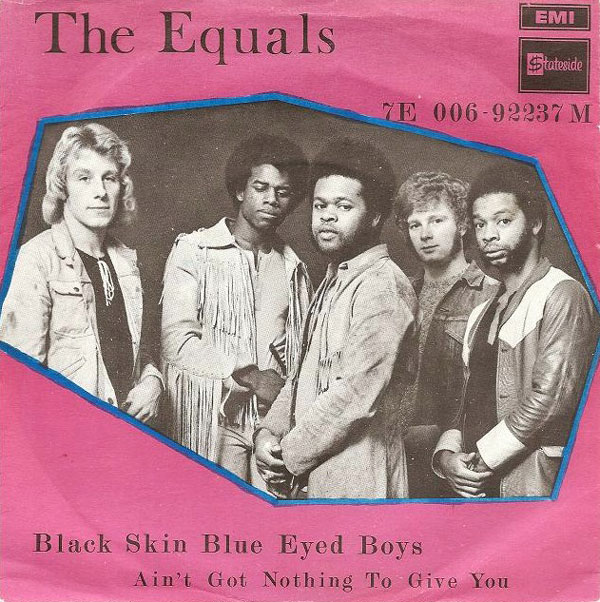
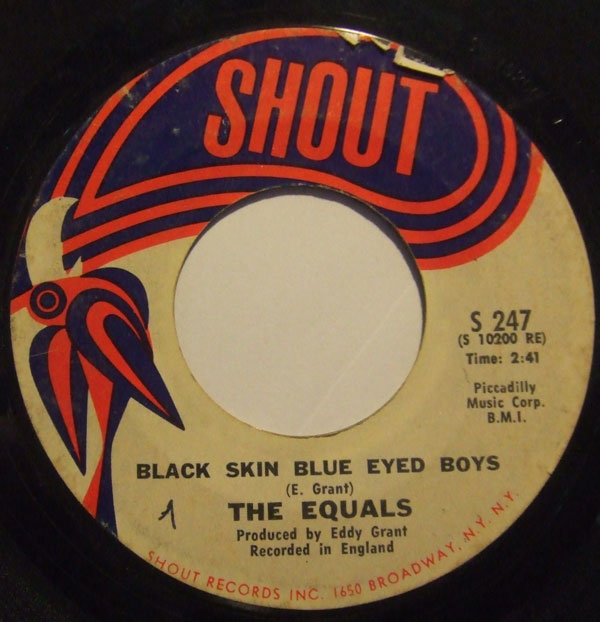
The Equals – Black Skin Blue Eyed Boys

By , April 1, 2014 10:58 am

Example

Euro P/S for ‘Black Skin Blue Eyed Boys’

Example

Listen/Download Equals – Black Skin Blue Eyed Boys

Greetings all

The middle of the week is nigh and I for one feel like I need to be shook/shaken from my quasi-hibernation.

The calendar says that winter is over, but my own two eyes (and the rest of my senses) say “Not so fast, brother.”, so in my cave I remain (for now) with my records.

The record I have selected for your enjoyment this fine day is a long time fave that eluded me for some time.

While the Equals’ ‘Black Skin Blue Eyed Boys’ is not a particularly rare or expensive record, neither is it plentiful or obvious.

It’s just that me and this 45 were both out there but kept passing like two ships in the night.

Until last year, that is, when I finally scooped it up.

The Equals are one of my favorite UK bands of the 60s (and early 70s) because they are as hard to nail down (stylistically) as they were groovy.

Formed in the mid 60s by two Jamaican emigres (brothers Lincoln and Derv Gordon), a guitar slinger from Guyana (Mr Eddy Grant) and two Brits(John Hall and Pat Lloyd) on a council estate in London, the Equals – always more successful in the UK and Europe than they were here – were one of the more interesting groups of the era.

While they were ostensibly a ‘rock’ band, they moved freely between rock, soul, psychedelia, R&B, pop and West Indian influences during their (1966-1973) career.

The tune I bring you today hails from the waning days of their chart success, being their last UK Top 10 hit (barely charting at all in the US) in 1970.

‘Black Skin Blue Eyed Boys’ is a hard hitting, funky protest number, touching on race relations and war, both hot-button issues at the time.

Written by Grant and sung in a typically forceful manner by Derv Gordon, ‘Black Skin Blue Eyed Boys’ was covered in the US by the group ST-4, and had a second, underground life as a popular tune in US dance clubs during the early days of disco culture.

It is a groover indeed.

I hope you dig it, and I’ll see you all on Friday.

Keep the faith

Larry

Example   _________________________________________________________________________________________


Also, the brand new Funky16Corners ‘Keep Calm and Stay Funky’ stickers have arrived! The stickers are 4″ x 3″ and printed on high quality, glossy stock. They are $2.00 each, with free shipping in the US ($2.00 per order shipping outside of the US). Click here to go to the ordering page.

Also, make sure that you check out the links below to the Be The Match Foundation and POAC (click on the logos for more info).


Example Example  

PS Head over to Iron Leg too.

Jingo

By , September 27, 2011 10:10 am

Example

The Originator: Babatunde Olatunji

Example

Example

Carlos Santana, wailing at Woodstock

Example

Example

Candido Camero on the congas…

Example

Listen/Download – Michael Olatunji – Gin-Go-Lo-Ba

Listen/Download – Santana – Jin-Go-Lo-Bah (Jingo)


Listen/Download – Candido – Jingo

Greetings all.

I have something very special indeed for your ears this fine day.

Early last year I ran a series of posts under the ‘Disco/Not Disco’ banner celebrating the sounds played by pioneering DJ David Mancuso at his legendary Loft parties in NYC in the early 70s.

Mancuso had become something of an idol/guiding force for me, in so far as I have tried to emulate his DJing ethos as it were during my own sets.

He was a trailblazing record wrangler because he always kept one specific thing in mind, that being the dance and played anything that kept things moving. His Loft sets were filled with unusual sounds, including in his sets music from the worlds of rock, soul, funk, world music and anywhere else he could find the groove.

The Loft predated and strongly influenced the ‘disco’ scene and Mancuso’s eclecticism was carried out into the clubs by the other DJs that attended and had their minds blown at his parties.

One of the records that was a cornerstone of his sets, and has on its own a very interesting history, was a cut by the name of ‘Gin-Go-Lo-Ba’ by Michael ‘Babatunde’ Olatunji.

Olatunji was a Nigerian drummer and educator who emigrated to the United States as a student to attend Morehouse College.

He eventually moved to New York City to attend NYU where he put together his own percussion group and drew the attention of two especially influential figures, the mighty John Coltrane and record impresario John Hammond.

Olatunji recorded the LP ‘Drums of Passion’ in 1960, which included the track ‘Gin-Go-Lo-Bah’*, as well as the less influential (but also important) ‘Akiwawa’.

I first heard of Olatunji back in 1990 when I read Mickey Hart’s remarkable book ‘Drumming at the Edge of Magic: A Journey into the Spirit of Percussion’** which led me to Olatunji’s 1988 recording ‘Drums of Passion: The Invocation’. It was many years later when I first read about David Mancuso that I made the Loft connection.

Mancuso would make the Olatunji version of the song a cornerstone of his Loft sets for obvious reasons. It has a driving rhythmic force and the accompanying chanting that would no doubt grab and shake any mass of dancers, and would also mix well with any number of more ‘conventional’ dance records.

It was at the end of the 1960s that Carlos Santana and his band would adapt and record the tune under the title ‘Jingo’ (which is the version that most people have heard). I’m including that version (the 45 edit at least) here for reference, and because it kicks all kinds of ass. Interestingly, the Santana 45 uses an approximation of the Olatunji title, though the album (and subsequent 45 releases) truncates it to ‘Jingo’. It’s amazing to listen to how a pack of electrified (in all senses), racially integrated hippies get deep inside the rhythm and blow it up.

A full decade after the Santana recording, the song would be resurrected yet again by another fixture of Mancuso’s Loft sets, Cuban conguero Candido (born Candido Camero), also under the title ‘Jingo’.

Candido’s version of the song takes the African percussion and chant of the original and recasts it inside an electric/disco setting and despite the fact that the edges may have been smoothed a little, the cut loses none of its propulsive power. Even after almost two decades, the song was still dance floor gold.

The mix here is the 45 edit, which clocks in at only 3:17. I wish I had a copy of the 12”, which goes for almost six more minutes.

‘Jingo’ was later redone for the dancefloors yet again in 1987 by Jellybean.

Babatunde Olatunji passed away in 2003 after a lifetime of teaching, social activism, and above all, drumming.

I hope you dig the tune (and maybe dance a little) , and the drums and I’ll be back on Friday.


Peace

Larry

*Oddly, the catalog number of the Olatunji 45 suggests that it was released sometime in 1967, long after the LP released but before the Santana cover

** If you have any interest at all in the power of drums and rhythm and the way they can propel human consciousness through the dance ritual I recommend Hart’s book highly.


Example


Also, make sure that you check out the POAC link below (click on the logo). It’s a fantastic organization that provides services to our local autism community, with education and recreational events, and any contribution you could make would be greatly appreciated.

Example


If you want one of the new Funky16Corners stickers (free, of course) click here for info.

Check out the Funky16Corners Store at Cafe Press

PS Head over to Iron Leg too.


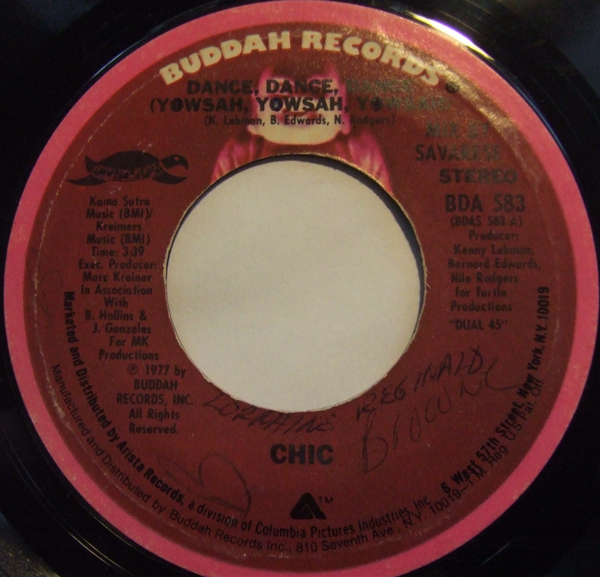
Chic – Dance Dance Dance (Savarese 45 Edit)

By , January 25, 2011 3:50 pm

Example

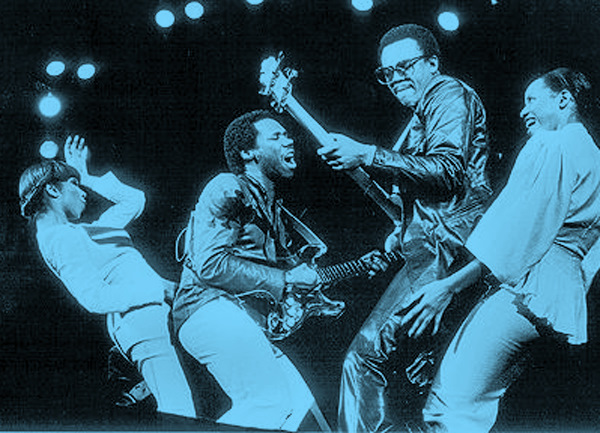
Chic

Example

Listen/Download – Chic – Dance Dance Dance (Savarese 45 Edit)

Greetings all.

Here’s hoping you’re all warm, dry and happy.

As has been discussed here several times, I am in the midst of a decades long effort to wrap my ears around disco.
Like any music, but especially music that has at times been reviled by a large segment of the population, disco has been misunderstood, if not totally written off by many. This happened for lots of reasons including race, musical subculture, homophobia, and as is also often the case, poor musical quality.

This is by no means an indictment of disco, but rather an acknowledgment of the fact that when any kind of music becomes hugely popular, it is often the worst of it, i.e. the most homogeneous, with the widest possible appeal to the lowest common denominator, that makes the most lasting mark.

There are of course always exceptions to the rule. But 30 years on, it’s not subtleties that get remembered.
It’s also important to note that by the time disco emerged from the nightlife underground and burst onto the national consciousness, much of the finest music that had gotten people out onto the dance floors had been supplanted by horrible, poorly constructed knock-offs, and all of the ephemera of disco culture.

Ask people old enough to remember the denouement of the disco era and you’re likely to get a word stew, equal parts Studio 54, cocaine, pre-AIDS sexual abandon and plodding, awful music.

However – there’s always one of those, isn’t there??? – do some digging (and as today’s records illustrate, you don’t have to go very deep) and there are lots of great sounds to be heard.

The real story of disco, a sound that is desperately in need of a new, better name that it will never get because nothing accurate (like 70s, urban, R&B based club dance music) rolls off the tongue quite as easily as what we already have, is a huge, interconnected saga of musicians transitioning out of the 60s soul era, pioneering DJs, producers and engineers, and of course the dancers, who for a few years in the mid -70s built a huge wave that is still breaking today.

Sadly, it seems that despite some very astute journalism on the subject (see links in this post), the true story of disco will likely never break out beyond the people that experienced it’s glory days first hand, and of course, record nerds. And to be totally honest, as is often the case, even though I know more about it than some folks, I’m barely scratching the surface. There are people out there that have spent years collecting this music, delving into the wildly varied permutations available with some records.

Unlike the music it replaced on the R&B spectrum, disco is harder to nail down because it had fundamental, structural differences.

Though a lot of the soul music the preceded it was meant to be danceable, disco, once it started to be ‘purpose built’ in the era of the 12 inch single, i.e. after the day of Loft classics like Eddie Kendricks ‘Girl You Need a Change of Mind’, was an entirely new kind of dance music.

There were auteur-producers before the 70s, but once disco began to happen, musicians, producers and engineers began deconstructing and rebuilding many of these records to fit the long-form dance experience.
Sometimes, when the raw materials were worthy, and the remixers talented (and occasionally visionary) the results were transcendent.

Of the Loft-era records that have been discussed here, specifically Booker T and the MGs ‘Melting Pot’ and the aforementioned Eddie Kendricks tune, what you were getting was an ‘organically’ long record with its own set of rhythmic and dynamic shifts that just happened, thanks to groundbreaking DJs like David Mancuso, to capture, and propel dancers.

As the mid-70s approached, and dance club culture (and the need for product) expanded, remixers stepped in and created longer – and in the best cases, better – records from raw material.

They also created a lot of pulsating, sonically uninteresting stuff as well, but as today’s selection illustrates, when it was good, it was REALLY good.

When I mentioned earlier that you didn’t have to dig very deep, Chic’s 1977 debut, ‘Dance Dance Dance (Yowsah, Yowsah, Yowsah)’ is the perfect example.

Released in 1977 (on Buddah, right before Chic signed to Atlantic*) was a Top 10 Pop and R&B hit.

Chic is an especially interesting example, because in an era, and a style of music often thought of as the product of faceless session musicians, they were an actual band. Formed by guitarist Nile Rodgers and bassist Bernard Edwards in 1976 (the pair had been playing together since 1970), with drummer Tony Thompson and vocalist Norma Jean Wright, the music that they made in the 70s and 80s is proof that disco could be much more than just a thumping beat.

‘Dance Dance Dance’, which was mixed/edited by Tom Savarese a popular NY area DJ (one of the first disco DJs to receive a label credit for his mix),  in both 45 (3:40) and 12 inch (8:21, you can get the long version on iTunes) versions.

The cool thing – at least to me – is that ‘Dance Dance Dance’ is not in any way (other than purely musical) a ‘deep’ record. The lyrics are spare (calling out popular dances, with the intermittent ‘Yowsah Yowsah Yowsah’**), but the music is nothing short of brilliant. It is the kind of record that forces you to move.

Compare it to a record like Bobby Freeman’s 1964 ‘C’Mon and Swim’, which although basically a laundry list of popular dance steps is still a brilliant dance record because of the combination of Freeman’s spirited delivery and a dynamic instrumental backing. It’s as basic as it gets, and in the wrong hands the formula can be leaden and idiotic, but in when done properly it can be anthemic and inspirational.

Opening with Edwards powerful, pulsing bass, Thompson’s sharp drumming and Rodgers slinky rhythm guitar, it also has (and this is the part I really dig) vocals that double as a device to carry both the melody and pure, rhythmic punch. The way the singers (including a young, unknown Luther Vandross) deliver the ‘BAH BAH BAH BAH BAH’s is as visceral as (occasionally more so than) the bass and drums and is truly a thing to behold.

I love the way the strings and the horns weave in and out of each other, as well as the latin percussion accents and hand claps.

Produced by Rogers and Edwards with Kenny Lehman (who gets a co-writing credit) is a record that bears up to close, repeated listening, as well as (naturally) dancing.

I hope you dig it, and I’ll be back on Friday.

Peace

Larry

Example

*The 12 inch version was eventually released on both Buddah and Atlantic

**The chant originated in the 1920s with orchestra leader Ben Bernie and was resurrected in the 1969 film (about 1930s dance marathons) ‘They Shoot Horses, Don’t They’

If you want one of the new Funky16Corners stickers (free, of course) click here for info.

Check out the Funky16Corners Store at Cafe Press

PS Head over to Iron Leg for some classic 1965 LA garage folk.

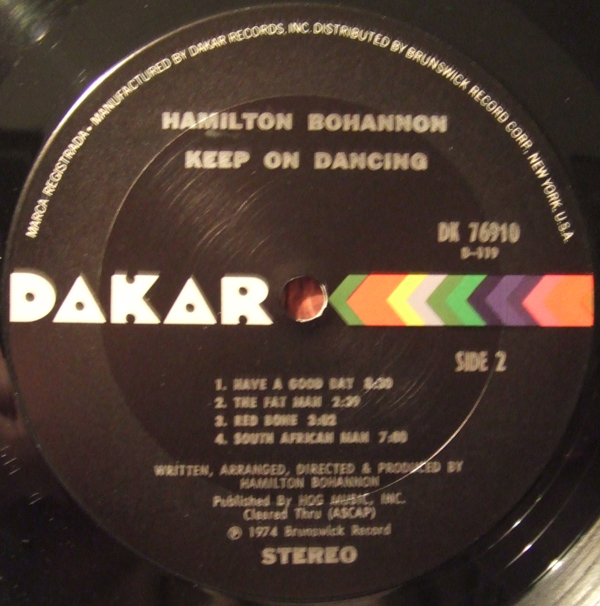
Hamilton Bohannon – South African Man

By , June 17, 2010 12:19 pm

Example

Hamilton Bohannon

Example

Listen/Download – Hamilton Bohannon – South African Man

Greetings all.

The end of the week is here, and it would appear that the summer weather may be returning as well (which is a good thing since the actual summer is only a few days away).
It’s Father’s Day this weekend, so I’m going to spend as much time chilling with my sons (and my lovely wife of course, without whom I would not be a father) and reflecting on how much my life has changed in the last decade (for the better, natch…).
The tune I bring you today is something I picked up a while back and have been exploring – at my leisure – ever since. A couple of other tracks from this album have seen inclusion in Funky16Corners Radio mixes, but I’ve saved the best for last.
If you’re a crate digger, or just a serious fan of funk and soul, you have certainly heard of Hamilton Bohannon.
Bohannon got his start drumming for Stevie Wonder and working at Motown as a percussionist and arranger during the 60s. After he moved on from Motown he signed with the Brunswick Records subsidiary Dakar where he would record several albums through the 70s.
Today’s selection, ‘South African Man’ is a long, funky, mid-tempo jam that didn’t make much of a dent stateside but was a dance floor hit over in the UK in 1975, the first of a half dozen hits he had in that country over the next seven years.
A lot has been said about Bohannon as a pioneer of disco, but his work is a lot closer to the Loft-era sounds discussed here in the past than any of the stereotypical sounds of the disco era.
‘South African Man’ is just about six minutes* of ‘vamp’, with a drum and bass heavy riff, augmented with clavinet and wah-wah guitar. The lyrics of the song – as they are – don’t really say much which is kind of surprising considering a song with this title in the heart of the apartheid era, but ultimately, ‘South African Man’ is less about thought and protest than it is about dance floor grinding in the club. And when I say grinding, I’m not kidding, since ‘South African Man’ lingers dangerously close to a porno-soundtrack vibe, which isn’t necessarily a bad thing, but yet another reminder that the hypnotic rhythms of the club aren’t just about dancing in the, how do they say, vertical position…
That said, slap this one on, stir yourself up an icy cocktail and enjoy the warm breezes of summer before they become (inevitably) oppressive.
See you on Monday.

Peace

Larry


Example

*Oddly listed as seven minutes long on the LP…


Check out the Funky16Corners Store at Cafe Press

PS Head over to Iron Leg for an unusual John Lennon cover

PSSS Don’t forget to hit up Funky16Corners on Facebook

You can also follow Funky16Corners on Twitter

Disco/Not Disco Pt3 – Cymande – Bra

By , February 11, 2010 6:57 pm

Example

Example

Cymande

Example

Listen/Download – Cymande – Bra

Greetings all.
The end of the week is here, and so is the final installment in the ‘Disco/Not Disco’ series.
It’s been interesting – at least for me – in that this is something that I’d been wanting to do for a long time, and kept putting it off until I had enough time to give it the thought it deserved.
The original intent was to present a couple of what I considered to be representative tracks from David Mancuso’s Loft repertoire, so that those of you reading, who may not have heard of him before might go a little bit further and as they say, read up on your read ups. Check any and all of the books I mentioned: Tim Lawrence’s book “Love Saves the Day: A History of American Dance Music Culture, 1970-1979”. Lawrence’s tome, along with Peter Shapiro’s ‘Turn the Beat Around: The Secret History of Disco’ (since retitled) and Bill Brewster and Frank Broughton’s ‘Last Night a DJ Saved My Life’ for a comprehensive history of club DJs, including Mancuso and his NY scene contemporaries.
The third and last song of the week is perhaps the most challenging of the three selections.
I’ve written about Cymande (a band I love a lot) in this space before.
Though they never rose to the prominence of either Booker T & the MGs or Eddie Kendricks, Cymande did hit the charts here in the US, twice in 1973. First with ‘The Message’, a Top 20 R&B hit, and then again (and for the last time) with today’s selection ‘Bra’ which hovered outside the R&B Top 50. They did make it onto the outer reaches of the Pop charts, but nothing significant, which is shame because they definitely had crossover potential.
Earlier I suggested that ‘Bra’ was the most challenging of this weeks selections. I don’t mean to suggest that it was in any way far out, but rather that its off-center groove, with stop time interplay between the percussion and the bass, with a less than ‘straight ahead’ rhythm. It’s not that I can’t imagine people getting down to ‘Bra’, but it’s definitely the kind of record that dancers might have to warm to, gradually, as opposed to a stereotypical floor-filler.
And therein lies the rub my friends, because that’s precisely the kind of chance that Mancuso would take, i.e. pulling an LP out of the crates and dropping a track – like ‘Bra’ – that while unquestionably danceable, is as valuable a listening experience as it is for dancing.
Co-written by guitarist Pat Patterson and bassist Steve Scipio, ‘Bra’ does open with rhythmically unusual riff – backed up by the song’s signature horn riff – but by the time the chorus comes in, the addition of a strong rhythm guitar propels the beat, rounding its sharp edges and settling into a more conventional groove. This is not to say that the tune loses any of its complexity, but rather, like any dozen James Brown records, the polyrythms are woven together so tightly that even someone with two left feet would be compelled to move.
The first time I had a chance to listen to Cymande’s three album discography in depth (via an old CD comp) what I got out of the experience – aside from lots of quality music – was the impression that despite the group’s marginal chart success, the listening public really missed the boat. The old saw is to indicate that an artist was ‘ahead of their time’ but in the case of Cymande I wouldn’t say that this was entirely true. This is how I described their music when writing about this track almost exactly three years ago:

“Their music was a sophisticated mixture of American soul and funk, African pop, Latin sounds, rock and all of the various and sundry intersections of those sounds. A close listen to their first LP is like a drive through Harlem in the early 70’s with your car windows down, letting snatches of Curtis Mayfield, Jimi Hendrix, Miles Davis, Stevie Wonder, Santana and a thousand lesser groups (woven securely into the fabric, but essentially lost to the ages) drift through the windows and into your ears.
There are elements of early-70’s prog-cum-stoner rock guitar, hard drums, jazzy bass and horns as well as a bedrock of polyrhythmic percussion.”

If my approximation of their sound is accurate, the conclusion you would reach is that they were very much of their time, and looking back, it seems amazing to me that they weren’t more popular. There were plenty of black acts incorporating elements of rock music into their sound, and by and large, though there are Jamaican influences (which had been popping in and out of radio playlists for much of the previous decade), they never overpower the band’s funky groove. While it’s understandable that a pop audience might not get too far into their sound, I’m puzzled that they didn’t make more inroads with the more progressive rock audience.
That said, placed against the other tracks in this week’s series, it’s ot hard at all to see why ‘Bra’ was so popular at the Loft. Earlier this week one of the readers requested that I post a Mancuso set list, so I pulled out ‘Love Saves the Day’ an retyped the list below, which doesn’t seem to represent any one night, but rather an amalgam of Loft favorites for the years 1970 to 1973. There are a fair amount of what one might consider to be ‘obvious’ dance records (James Brown, Beginning of the End, Manu Dibango*), a couple of less obvious tunes for the trainspotters, including jazz rock like Traffic’s ‘Glad’ and Brian Auger and the Trinity’s version of Eddie Harris’ soul jazz classic ‘Listen Here’, the breakbeat fave ‘The Mexican’ by Babe Ruth, as well as unusual (likely transitional, mood pieces) like the Beatles’ ‘Here Comes the Sun’ and Exuma’s ‘Exuma the Obeah Man’. While there’s a fair amount of info out there listing individual records as ‘Loft favorites’ I was unable to find any specific playlists from the venue’s early 70s heyday.
Interestingly enough, Mancuso has kept some version of his Loft going (at a number of different locations) continuously (though with decreasing frequency) right on through the disco and house music eras. He still travels internationally, putting on Loft parties around the world.
If reading in-depth studies of dance music culture isn’t your bag, see if you can track down the 2003 documentary ‘Maestro’, that follows the development of New York DJ culture from Francis Grasso in the late 60s, all the way through to the end of the Paradise Garage (with Larry Levan) in 1987. It manages to touch on most of the major players, and there are lots of interviews with people that witnessed the development of DJ/club culture while it happened.
I hope that this week’s series has been enlightening (at least musically).
I’m going to see if a hot shower will soothe the muscles and tendons I wore down shoveling snow.
Have a great weekend, and I’ll see you all on Monday.

Peace

Larry

The Loft – Selected Discography 1970 – 1973
From ‘Love Saves the Day’ by Tim Lawrence
Brian Auger & the Trinity – Listen Here
Babe Ruth – The Mexican
Barrabas – Wild Safari
Barrabas – Woman
The Beatles – Here Comes the Sun
Beginning of the End – Funky Nassau
Booker T & the MGs – Melting Pot
James Brown – Get Up I Feel Like Being a Sex Machine Pt1&2
James Brown – Give It Up Or Turnit a Loose
Chakachas – Jungle Fever
Cymande – Bra
Manu Dibango – Soul Makossa
Equals – Black Skinned Blue Eyed Boys
Exuma – Exuma the Obeah Man
Aretha Franklin – Ain’t No Way
Al Green – Love and Happiness
Willie Hutch – Brother’s Gonna Work It Out
Intruders – I’ll Always Love My Mama
JBs – Gimme Some More
Eddie Kendricks – Girl You Need a Change of Mind
Morgana King – A Taste of Honey
Gladys Knight & the Pips – It’s Time To Go Now
Little Sister – You’re the One
Curtis Mayfield – Move On Up
Dorothy Morrison – Rain
Van Morrison – Astral Weeks
O’Jays – Love Train
Olatunji – Drums of Passion
Osibisa – Survival
Edwin Starr – War
Traffic – Glad
Tribe – Koke
Troubadours du Roi Baudouin – Missa Luba
War – City, Country, City
War – The World Is a Ghetto

Example

*The story goes that it was the NY club DJs that made Manu Dibango’s ‘Soul Makossa’ a hit before it was widely available in the US, which explains the many covers/rip-offs of the tune that flooded the market before Atlantic released the song domestically

Check out the Funky16Corners Store at Cafe Press


PS Head over to Iron Leg for some country rock

PSS Check out Paperback Rider too.

PSSS Don’t forget to hit up Funky16Corners on Facebook

You can also follow Funky16Corners on Twitter

Disco/Not Disco Pt2 – Eddie Kendricks – Girl You Need A Change of Mind

By , February 9, 2010 5:47 pm

Example

Example

Eddie Kendricks

Example

Listen/Download – Eddie Kendricks – Girl You Need a Change of Mind

Greetings all.
As I write this, I still can’t feel the lower right side of my face, having spent the morning with the dentist and her assistant rummaging in my mouth like it was an old sofa and they’d lost a hundred dollar bill. I even got soup for lunch and STILL managed to bite my lip. Fortunately, the good doctor informs me that aside from an extraction, my dental worries for the year are at an end (until next year and the insurance starts paying again).
A look out the window at the foot or so of snow on the lawn is bad enough, but the weatherman is now forecasting another foot or so for tonight into tomorrow. Once again I ask, WTF? I don’t mind the weather as much as I’m terrified of venturing out onto the roads, alongside the large number of New Jersey residents who have no idea how to drive in the snow. Half of them are going way too slow, and the other half, cruising around in their gas sucking luxury behemoths are going way too fast, thus making the NJ highways – already a gauntlet of sorts – into a veritable death trap. With any luck, the wife and kids will have the day off, so we can stay home and sit beside the fire.
That said, it’s time to continue our week long tribute to David Mancuso and the records he played at the Loft.
Earlier this week, not long after I finished writing the post about Booker T & the MGs, it occurred to me that the vibe I got when reading about Mancuso, and his work as a DJ reminded me of a phrase I learned from a friend many years ago.
Back in the day, though (wisely) I never set foot on a surfboard, I became fascinated with the history of the sport – especially the big wave riders – and I had a couple of friends (thanks to living and working by the beach) who actually surfed. Now, the “waves” (quotes added for sarcasm) at the Jersey Shore rarely rise above a height considered safe for small children and old ladies (aside from those whipped up by the occasional Nor’Easter or hurricane). Despite this fact, no matter what time of year it is, if I take a ride along the beach –especially in the morning – there are surfers out there, making the best of what the ocean has to offer.
Why do I mention this? Because, (also) back in the day, my buddy Joe introduced me to the concept of the ‘soul surfer’. Obvious puns aside, what this refers to is an individual who is technically adept enough to compete with the big dogs, yet rides the waves solely for the sheer pleasure of it, making it into a spiritual endeavor. The more I thought about Mancuso, the Loft and the ideas he brought to the game (and how he inspired me) the more it occurred to me that it made sense to apply that term to Mancuso and those that follow(ed) in his footsteps.
I realize that there are all kinds of DJs out there, separated not only by genre, but also by their approach to spinning (though god knows the cats that actually use records are becoming an endangered species). Ideally, when you enter the DJ booth, your ultimate goal ought to be that the folks dancing, listening or both, have a good time. How good a time they have is dependent on a number of factors, the most important being the quality of the music, and the way you (the DJ) present it to the crowd.
The corner of the musical universe I tend to kick around in is generally concerned with soul and funk, of the vintage persuasion. The folks that come to hear and dance to this music are usually a mix of aficionados, i.e. your Mods and soulies that know their way around and are probably already acquainted with some of the rarer discs in my record box, and regular folks who just want to hear something they can dance to.
It probably goes without saying (but I’ll say it anyway) that the vast majority of DJs in this field are – like myself – what our friends in the UK refer to as anoraks and trainspotters, i.e. detail-oriented obsessives with an eye turned to the rare an obscure. The duty of this type of DJ is to balance their own love for the obscure against the true quality of the records in question (on account of the rarity of a record often- not always – has an inverse relation to the quality), and to offer up a playlist that is interesting, but ultimately satisfying to the largest possible number of people. Finding this balance isn’t always easy. I’ve seen people with incredible record collections step up to the tables and drop one ultra-rare stinkbomb after another. I’ve also seen people with less impressive crates (but spectacular taste) light up a dancefloor with dollar bin wonders.
Today’s selection from the Loft, Eddie Kendricks’ mighty ‘Girl You Need a Change of Mind’ is from the less-obscure end of the spectrum. The song appeared on Kendricks’ landmark 1972 LP ‘People Hold On’, and though it wasn’t a hit*, he was well known from his years in the Temptations, and had scored a chart hit with that album’s opening track ‘If You Let Me’. Like Monday’s tune ‘Melting Pot’, I first heard ‘Girl You Need a Change of Mind’ as a 45 edit. Unlike ‘Melting Pot’, ‘Girl…’ made an impact on me, even in its shortened version.
Written by Motown legend Frank Wilson and Anita Poree (though the 45 credits it to Poree and ex-Radiant Leonard Caston, who co-wrote a number of other songs on ‘People Hold On’), ‘Girl You Need a Change of Mind’ is the ultimate illustration of the ‘disco/not disco’ tag.
Eddie Kendricks is unquestionably one of the fathers of what came to be known as disco. The two years after ‘People Hold On’ saw him have big hits with two of the genre’s important early songs, ‘Keep On Truckin’ and ‘Boogie Down’. While ‘Girl…’ isn’t quite as explicitly “disco” as either of those tracks, all of the stylistic cues are present, albeit not fully formed. Like ‘Melting Pot’, ‘Girl…’ contains multitudes in its seven and a half minute span. Though it works wonders as a three and a half minute soul single, it passes over into the realm of dance floor epic in the album version.
The opening riff, with a simple piano riff over spare percussion – soon joined by snare drum and horn flourishes, opens up into a relatively slow (yet danceable) verse. It’s around the two and a half minute mark, with Kendricks repeated ‘What you say to that?’ refrain, that the tempo escalates, backed by a muscular rhythm guitar (right about where the 45 version fades out). Things change again around 3:45, where everything except the lead guitar and tambourine drop out, the band gradually coming back in (the piano and rhythm guitar are especially sweet here) until the drums come in strong at about 5:10. It’s at this point where the picture of ‘Girl You Need a Change of Mind’ as dance floor epic comes into full focus. Unlike many 12” singles that would drop in the coming years, ‘Girl…’ is both song enough for the radio, and (in it’s LP form) long enough for the dancers.
Things change yet again at 5:55 – and again this must have been absolutely magical over the Loft’s sound system – as we’re left with just the congas and Kendrick’s falsetto, followed in short order by the band returning to full power by the end of the record (sounding – at this stage – several years ahead of its time).
Interestingly enough, as proto-disco goes, it’s another ‘People Hold On’ track, ‘Date With the Rain’ – another big hit in the clubs that failed to score on the radio – a remarkable (but tragically short, at 2:40) dance record, that more closely fits the mold. It is also available (but much rarer) on 45.
I hope you dig the track(s), and I’ll be back on Friday with another great record.

Peace

Larry

Example

*CORRECTION – I just dug out my Billboard R&B Chart book, and discovered that ‘Girl You Need a Change of Mind Pt1’ (the 45 edit)  was in fact a Top 20 R&B hit.

PS: Don’t forget this Wed 2/10 at Master Groove @ Forbidden City – DJ BlueWater, DJ Prime Mundo, DJ Prestige

Check out the Funky16Corners Store at Cafe Press


PS Head over to Iron Leg for something by the Beach Boys

PSS Check out Paperback Rider too.

PSSS Don’t forget to hit up Funky16Corners on Facebook

You can also follow Funky16Corners on Twitter

Disco/Not Disco Pt1 – Booker T & the MGs – Melting Pot

By , February 7, 2010 6:24 pm

Example

Example

Booker T and the MGs

Example

Listen/Download – Booker T & the MGs – Melting Pot

Greetings all.
I hope that those of you located in the path of the big snowstorm are well, shoveled out and warm. Unlike the last time storm, during which my snowblower was locked in the tool shed, its get up and go having got up and went, the most crucial of snow battling machines was up and running this time, making for a much neater, much less labor intensive experience. There’s still a shit-stack of the white stuff surrounding the Funky16Corners compound, but ingress and egress are assured.
This week is another one of those Funky16Corners ‘theme’ extravaganzas, in which I dip into the vault and run a Sesame Street – ‘How are these things like one another’ – game on you, but provide you with the answers (or at least my version thereof).
Last year, one of my major reading experiences was Tim Lawrence’s book “Love Saves the Day: A History of American Dance Music Culture, 1970-1979”. Lawrence’s tome, along with Peter Shapiro’s ‘Turn the Beat Around: The Secret History of Disco’ (since retitled) and Bill Brewster and Frank Broughton’s ‘Last Night a DJ Saved My Life’ when taken together form a de fact encyclopedia of modern DJ culture. All three are well written and deeply informative, but more than that, they introduce you to a couple of seminal personalities without whom DJ-ing (and dance music) would not exist as it does today.
Because of these three books, I came away with a deep and abiding respect (bordering on idolatry) for the work of David Mancuso. It was Mancuso (pictured above), who in 1970 threw the first dance party in his loft (which became The Loft), calling it Love Saves the Day (get it? Nudge, nudge say no more…). Though there were many other important figures in DJ culture (especially Francis Grasso who paved the way for Mancuso in New York City), for me, Mancuso rises above all others.
From the very first time I entered a DJ booth, I’ve endeavored to create an experience for the people on the dance floor turning solely on the gears of good music. Some of it was rare, some of it extremely common, but the idea was to drop the needle on something that the dancers would dig, and do my best to lift the room. Years later, when I became aware of Mancuso through the books listed above I realized that he was in many ways the ur-DJ.
If you’ve spun records for a crowd, you already know (or should) that nothing feels better than laying down some quality sounds and feeling the energy on the dance floor build, incrementally, layering record on top of record, shifting the tempo up (most of the time anyway) but always attempting to build on that increase with a parallel increase in the quality of the music coming out of the speakers. There’s something to be said for the idea that on a perfect night, a DJ is something akin to the ancient cats drumming around the fire, whipping their fellow tribesmen into a lather, drumming harder as they dance faster until the lot of them were participants in a musical hive mind of sorts, connected by the beat. When you’re spinning records, sometimes it only comes together for a couple of songs, sometimes not at all, but when it does there’s nothing better. Certainly the vast majority of people in a dance club are there first and foremost to have a good time, but there’s no reason in the best of all possible worlds that it can’t also be elevated to the spiritual level.
Before you can get to that specific place, a DJ has to do two fundamental things.
First and foremost, keep your ears (and your mind) open. The more you listen to, and the more time you spend among others that really know and seek out good music the larger your internal repertoire/reference library is going to be.
Second, and if you’ve spent any time following the going on here at Funky16Corners you probably picked up on this one: keep digging. The more time you spend actively seeking out new music in the field, the more likely it is that when the time comes to pull some heat out of your crates and drop it on the ones and twos that you’ll be making a good choice.
Certainly there’s the issue of taste, but even that can be improved with enough study.
That all said, what I came away from all three of those books knowing about David Mancuso, was that his tastes were expansive. A look at his playlists reveals that alongside many accepted classics (many of those placed in the canon by Mancuso and his contemporaries) there were a lot of – for lack of a better term – ‘unusual’ choices. Half a decade before guys like Kool Herc and Flash were cutting rock breaks in the Bronx, Mancuso was playing all manner of rock, jazz, world music and pop sounds at the Loft, alongside a healthy portion of what are now considered ‘consensus’ dance records.
Remember, we’re talking about an era where the large majority of genres that rule the dance club world today hadn’t yet been codified. ‘Disco’ was years away from common usage and 12” singles – with their dance floor specific extended versions – did not yet exist. Though there were some records on his playlists that are now considered part of the vanguard of what would come to be known as disco (especially some Eddie Kendricks jams, one of which will be featured later this week), Mancuso mixed in just about anything else that made sense in the context of his sets.
The Loft parties, though conceived on an intimate scale, were hugely influential, with regular attendees/devotees including Nicky Siano (the Gallery), Larry Levan (Paradise Garage) and Frankie Knuckles (the Warehouse, from which ‘house’ music got its name) all of whom went on to marks on dance music culture in their own ways.
The first track I’m going to bring you this week is a perfect (capsule) example of all that was great about the Loft. Oddly enough, the first time I heard Booker T and the MGs doing ‘Melting Pot’ it was on a 45, with the vast majority of its power stripped away. After reading about its place of honor at the Loft, I sought out the 1971 LP of the same name. I finally scored a copy when I was DJing down in DC last year. Once I got it home and had a chance to drop the needle on the LP version of the title song, it became obvious why Mancuso used it at the Loft.
‘Melting Pot’ is, inside of its eight minute playing time, a microcosm of an entire set. The song opens with rimshots by Al Jackson, but it’s Steve Cropper’s pulsing rhythm guitar that sets the pace. When Booker T’s organ and Jackson’s drums come in the groove is locked down. The band – one of the tightest of the classic soul era – only really works up a full head of steam at the three minute mark, which explains why the 45 lacks the punch of the LP version.
It’s important to note the atmosphere in which the ‘Melting Pot’ album was created. It was the last album by the classic MGs lineup. Booker T Jones was fed up with the new regime at Stax and was on the verge of leaving the group. He refused to record in Memphis, so the album was recorded on the road in NYC. The sound of the album is a serious departure from the band’s earlier work, revealing a more expansive, more progressive Booker T and the MGs. While tracks like ‘Chicken Pox’ – with the MGs channeling the Meters – show that they might not have been leading the pack anymore, a cut like ‘Melting Pot’ shows that had they stayed together, they might very well have moved to the front once again.
As I mentioned before, ‘Melting Pot’ is almost like a small, self-contained DJ set. The song has several distinct sections in which the MGs bring up the tempo gradually, hit a peak and then chill out, only to re-state the groove again and again, bringing the dancers along for the ride. Listen at around 4:15 where Jones and Duck Dunn fall back, leaving Jackson and Cropper to rebuild the song from the opening statement. Dunn drops back in with a repeated, almost circular bass line, and Jones solos over the top of it all. I can only imagine what Al Jackson’s punchy bass drum accents sounded like pouring out of the Loft’s sound system. While ‘Melting Pot’ is clearly not ‘disco’ as it came to be known, the second half of the song is definitely a prototype for extended dance mixes to come. The temptation, as the song fades out just past the eight minute mark, is to cue up a second copy and keep the groove going.
‘Melting Pot’ which was the last 45 by the classic Booker T and the MGs line up, and strangely enough the flip side is another drastically truncated long jam,’Kinda Easy Like’ which also runs over eight minutes on the LP. It grazed the Pop Top 40 and hit the R&B Top 20. Following the ‘Melting Pot’ album, Booker T Jones would leave the group and relocate to California where he would work with artists like Bill Withers. Cropper would also leave the fold, with Dunn and Jackson reconstituting the MGs with a new organist and guitarist.
All in all, ‘Melting Pot’ is – at least for those that haven’t heard it – a revelation, and a great way to start a week of Loft tracks.
I hope you dig it, and I’ll be back on Wednesday with something cool.

Peace

Larry

Example

PS: Don’t forget this Wed 2/10 at Master Groove @ Forbidden City – DJ BlueWater, DJ Prime Mundo, DJ Prestige

Check out the Funky16Corners Store at Cafe Press


PS Head over to Iron Leg for something by the Beach Boys

PSS Check out Paperback Rider too.

PSSS Don’t forget to hit up Funky16Corners on Facebook

You can also follow Funky16Corners on Twitter

Panorama Theme by Themocracy