
The painting of Gene from the cover of ‘Organ Out Loud’ by Jack Lonshein

Gene Ludwig at the organ (Circa 1965)
Listen/Download – Gene Ludwig -Sticks and Stones
Listen/Download – Gene Ludwig – The Vamp
Listen/Download – Gene Ludwig – Blues For Mr Fink
Listen/Download – Gene Ludwig – House of the Rising Sun
Listen/Download – Gene Ludwig – Comin’ Home Baby
Listen/Download – Gene Ludwig – Moanin’
Greetings all.
As I mentioned in Friday’s post, I got the very sad news last week that Hammond master Gene Ludwig had passed away at the age of 72.
If you’re one of the rare few that’s been on the Funky16Corners tip since the web zine days, you know I ride for the Hammond organ in a big way, from the greasiest R&B, to pure soul, soul jazz and funk, I have never been able to get enough of the Hammond sound.
Gene Ludwig was one of the last of what I would call the accepted past masters of the jazz organ. He was a contemporary of Brother Jack McDuff, Jimmy McGriff, Dr Lonnie Smith, Seleno Clarke and pretty much everyone else that was part of the jazz organ explosion of the 50s and 60s.
What Gene was also a part of was the great – mostly unexplored – Pennsylvania organ tradition. One of the really interesting things I picked up out of years of collecting and researching Hammond records was how many great players hailed from the Keystone State (and not just Philly). The man that launched a thousand organ combos, the mighty Jimmy Smith as well as Jimmy McGriff, Charles Earland, Richie Varola, Greg Hatza, Papa John and Joey DeFrancesco, Shirley Scott and of course Gene Ludwig all got their start in the bars and nightclubs of Pennsylvania, in both the big cities and out in the hinterlands. Was it something in the water? An abundance of organs (or bars/lounges with organs in them)?
In his obit Gene was quoted as saying that he turned on to R&B (and organ players) by listening to Pittsburgh radio legend Porky Chedwick. Pittsburgh has a long history as a kind of isolated Shangri La for R&B and soul fans where any number of brilliant but obscure records are worshipped by the locals because they were circulated on the radio and at dances.
Whether this had anything to do with spawning organists, as opposed to just fans of the sound, I have no idea, but it is intriguing.
Gene Ludwig – a native of the wester PA town of Twin Rocks started out as a pianist, and had his ‘road to Damascus’ moment when he saw Jimmy Smith perform at a Pittsburgh club called the Hurricane in 1957.
Ludwig went on to have a 50 year career as one of the great proponents of the Hammond, recording locally as well as on national labels like Mainstream and Atlantic.
He was really what I would consider (at least for my taste) the consummate organist in that he approached the instrument from a jazz perspective (with serious chops to match) yet was not afraid to cut loose and burn on the keyboard, expanding into the realms of R&B and soul.
I’ve consumed a lot of virtual ink rambling on about this or that ultra-raw organ 45, but the best Hammond players, no matter how soulful or funky all came to the instrument from the jazz roots.
Gene Ludwig was old enough to hear the early rumblings of the Hammond sound from the jazz/jump/R&B nexus of cats like Wild Bill Davis, Bill Doggett and Milt Buckner, and mastered the instrument in the wake of the mid-50s scene when Jimmy Smith rewrote the book on jazz organ.
The ensuing expansion of the electronic organ, as both a performance platform and recorded instrument was wide ranging on both established jazz labels like Blue Note, Prestige, Riverside and Atlantic, but as my crates will attest, on countless tiny local labels eager for a piece of the action. It’s not at all hard to imagine walking into a bar in 1965, strolling up to the jukebox and seeing the organ stylings of a regional favorite among records from out of town.
Gene Ludwig was both a regional player (probably half of his discography is rooted locally) and an internationally known master of his instrument who headlined and worked as a sideman (replacing Don Patterson in Sony Stitt’s late 60s band).
Gene remained devoted to the Hammond, and a glimpse at his web site will reveal that he was playing, recording and above all staying relevant right up until his unexpected and tragic passing.
He was a musician of great taste with an ear for that perfect soul jazz vibe, yet was also conversant in standards (which any organist working the clubs in the 60s would have had to have been) and was by all accounts an unfailingly generous soul when it came to mentoring younger players.
Though I never got to meet Gene or his wife Pattye in person, I was lucky enough to correspond with them over the years (Gene had no bigger booster than Pattye), including an interview I did with the master back in 2005.

The Gene Ludwig Trio in the 1960s (above) and reunited in 2004 (below)

The tunes I bring you today represent a cross-section of the sound of Gene Ludwig through the 1960s. As far as I can tell all of these cuts feature his classic 60s-era trio which featured Randy Gelispie (or Gillespie, I’ve seen it spelled both ways) on drums and Jerry Byrd on guitar.
A few of these cuts have been featured here in the past, but they deserve to be heard again.
The first track is the Ludwig’s trio’s smoking version of the Henry Glover/Titus Turner classic ‘Sticks and Stones’, which appeared as a two-part 45 in 1963 (I’ve spliced the two parts together). The trio’s playing is spot on, relaxed yet generating a considerable amount of heat, and Gene is in rare form. I’ve heard there’s at least one other unissued side from that date, a version of ‘High Heel Sneakers’.
Next up is a track discussed here in the past, the brilliant ‘The Vamp’, which appeared as a 45 and on the LP ‘The Educated Sound of Gene Ludwig’ in 1965. If you haven’t heard ‘The Vamp’ strap yourself in because it’s a killer. Improvised in the studio by the trio, it featured Gene on the organ, Byrd on guitar and Gelispie on tambourine only. It has the feeling of an after-hours session gone wild, and is probably my favorite moment in Gene’s discography.
‘Blues For Mr. Fink’ and ‘House of the Rising Sun’ are both culled from an oddball 1960s compilation called ‘The Keyboards’ on the Time label, which features Gene Ludwig, and five other players performing in a wide variety of disparate styles. None of the album’s 20 tracks are attributed to anyone specific, but I knew of the Ludwig tracks from other sources (which is why I picked it up).
My suspicion has always been that all of the Gene Ludwig material on that record came from his time with the Mainstream label, since Bob Shad is credited with A&R on the jacket, and a few of the tracks also appear on the 1964 Mainstream LP ‘Organ Out Loud’.
The last two tracks appeared on what I would consider to be one of the great soul jazz organ sessions of the classic era, the aforementioned ‘Organ Out Loud’. Here Gene and the trio work it out on two classics of the genre (the LP also included wonderful versions of Cannonball Adderley’s ‘Sermonette’ and Horace Silver’s ‘The Preacher’), Bob Dorough and Ben Tucker’s ‘Comin’ Home Baby’ and Bobby Timmons’ ‘Moanin’.
‘Comin’ Home Baby’ is taken at a touch more relaxed pace than you usually hear, but the group keeps it moving and grooving, and Gene takes a wild solo.
‘Moanin’ on the other hand takes off like a rocket and never slows down. It’s the kind of performance that makes me want to step into the WABAC machine and hear the group in some smoky lounge. Gene’s fingers fly over the keys while the rhythm section provides a rock solid bottom.
If you ever get a chance to get your hands on any of his 60s albums or 45s (and there’s still a couple of things I have yet to track down) do yourself a favor and do it.
You still have the chance to hear his more recent recordings, which are uniformly excellent.
That all said, it’s so sad to have to talk about this great music in light of Gene’s passing.
He was a great musician, and by all accounts as solid a human being as has passed this way.
He will be missed.
My sincere condolences go out to his wife Pattye.
See you later in the week.
Peace
Larry

Check out the Funky16Corners Store at Cafe Press
PS Head over to Iron Leg for some classic British Beat


 Comments (1)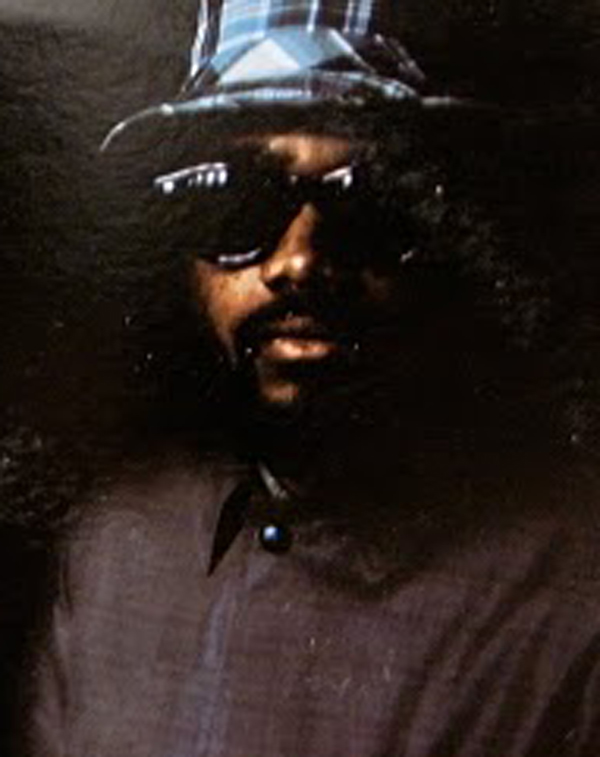


 Themocracy