Category: Original Versions

Jerry Ragovoy 1930 – 2011

By , July 17, 2011 3:25 pm

Example

Jerry Ragovoy

Listen/Download – Howard Tate – Get It While You Can (1)

Listen/Download – Lorraine Ellison – Stay With Me (2)

Listen/Download – Lorraine Ellison – Try (Just A Little Bit Harder (3)

Listen/Download – Erma Franklin – Piece Of My Heart (4)

Listen/Download – Garnett Mimms and the Enchanters – Cry Baby(5)

Listen/Download – Irma Thomas – Time Is On My Side(6)

Listen/Download – The Olympics – Good Lovin(7)

Listen/Download – Terry Reid – Stay With Me Baby (8)

1 – Written/produced/arranged by Jerry Ragovoy

2 – Written by Jerry Ragovoy and George David Weiss, produced by Ragovoy

3 – Written by Jerry Ragovoy and Chip Taylor, produced by Ragovoy

4 – Written by Jerry Ragovoy and Bert Berns

5 – Written by Ragovoy and Berns as Meade and Russell

6 – Written by Jerry Ragavoy with additional lyrics by Jimmy Norman

7 – Produced by Jerry Ragovoy

8 – Ragovoy/Weiss


Greetings all.

I hope everyone is well.

I come to you this day with a heavy heart, since the news came down last week that one of the greatest soul songwriters and producers of the classic era, the mighty Jerry Ragovoy had passed away at the age of 80.

His name was probably familiar to label scanning record nerds (like myself) and soulies, but largely unknown to the general public.

The same cannot – thankfully – be said of the music he made as a songwriter, producer and arranger.

Ragovoy got his start working as a music buyer for an appliance and record store in his native Philadelphia. He eventually found work as an arranger and writer for Chancellor Records, before moving to New York and hooking up with Bert Berns with whom he wrote his first big soul hit, Garnett Mimms and the Enchanters ‘Cry Baby’ in 1963.

Through the 60s, under his own name and psuedonyms like ‘Norman Meade’ and ‘Norman Margulies’ – it’s been said that he thought the record he worked on would lose airplay if he was listed as producer and songwriter – he wrote or co-wrote a string of genuine soul classics for the likes of Howard Tate, Erma Franklin and Lorraine Ellison, and had his songs covered by the James Gang, Terry Reid and most famously, Janis Joplin.

I don’t exaggerate when I say that many records from the Ragovoy canon hold a special place of honor in my record box and my heart.

The most important of these is Howard Tate’s ‘Get It While You Can’.

One of the greatest soul ballads of the 1960s by any measure, it’s the finest thing that Ragovoy and Tate created during their time working together, and epic in every sense. Co-written by Ragovoy and Mort Shuman, ‘Get It While You Can’ is a slow building show-stopper with a brilliant lyric, delivered with both intensity and nuance by Tate (and piano by Ragovoy himself). It is a record of singular power that never fails to bring me to tears.

It would be a gross understatement to say that Ragovoy had a special talent for grand soul ballads. If the best songs he wrote were spread over the catalogs of a few different songwriters they would be hailed as masters.

How surprising must it be for some people to discover that the same man wrote or co-wrote ‘Time Is On My Side’, ‘Cry Baby’, ‘Piece of My Heart’, ‘Stay With Me’ and ‘Get It While You Can’, and then even more shocking when you realize that he also produced the landmark versions of many of them?

There’s the famous story of the creation of Lorraine Ellison’s ‘Stay With Me’ (co-written by Ragovoy and George David Weiss) in a block of abandoned Frank Sinatra studio/orchestra time, one of the greatest soul ballad performances ever, put together on incredibly short notice.

It is also a testament to the power of Ragovoy’s songs that they translated so well in the rock world.

The first Jerry Ragovoy song I remember associating with his name was the James Gang’s 1969 version of ‘Stop’ (originally recorded by Howard Tate), long a teenage favorite of mine which I only discovered was a cover years later when a friend played Tate’s version at a party.

The only rock take on one of Ragovoy’s tunes I bring you today has become one of my favorite recordings in any genre, Terry Reid’s 1969 recording of ‘Stay With Me (Baby)’.

Though he is not well known in the US, Reid had a brief heyday on the the underground FM airwaves of the late 60s and early 70s. he was possessed of a voice reminiscent of a somewhat more refined version of Steve Marriott and in the midst of an era filled with overkill, his recording of ‘Stay With Me Baby’ is a revelation. The instrumentation is fairly spare and restrained, giving Ragovoy’s melody full attention and is, at least in my opinion, every bit as majestic in its own way as Ellison’s version (whose 1968 original recording of ‘Try (Just A Little Bit Harder)’, another tune covered by Joplin, is also included).

For those that haven’t heard Erma Franklin’s original (1967) version of ‘Piece of My Heart’, it too should prove to be an eye-opening experience. Franklin’s approach to the song, cross-breeding lamentation and defiance and delivered in her deeply soulful voice employs a dynamic range and casual power that Joplin  – at least to my ears – never really achieved.

Also worth hearing is a great example of Ragovoy’s work as a producer, the Olympics 1965 recording of ‘Good Lovin’ (arranged, as was Franklin’s ‘Piece of My Heart’ by Gary Sherman).

Ragovoy continued to write and produce into the 70s and went on to open and run the famous Hit Factory recording studio from 1969 to 1975 when it was sold.

If the sounds herein interest you, make an effort to pick up the outstanding Ace Records comp ‘The Jerry Ragovoy Story’ which covers his best work as a songwriter and producer from the early 50s into the 70s.

He was a master, and will be missed.

Peace

Larry


Example

____________________________________________________

Example

PS Don’t forget, Monday, 7/18 I will be sitting in for DJ Perry Lane and spinning at Spindletop @ Botanica (47 E. Houston St, NYC). I will be joined by M-Fasis and Joe Cristando, so come on by for some hot music and some cold drinks…


Also, make sure that you check out the POAC link below (click on the logo). It’s a fantastic organization that provides services to our local autism community, with education and recreational events, and any contribution you could make would be greatly appreciated.

Example


If you want one of the new Funky16Corners stickers (free, of course) click here for info.

Check out the Funky16Corners Store at Cafe Press

PS Head over to Iron Leg too.


F16C Radio v.94 – The Living Piano

By , June 26, 2011 4:01 pm

Example

In black and white, like the keys, dig?


Dee Felice Trio – There Was a Time (King)
Don Randi – Taxman (Reprise)
New London Rhythm and Blues Band – Soul Man (Vocalion)
Ramsey Lewis – African Boogaloo Twist (Cadet)
Roy Meriwether Trio – What’s the Buzz (Notes of Gold)
Overton Berry Trio – Guacamolean Shuffle (Jaro)
Gene Harris – Green River (Blue Note)
Johnny Watson – Hold On I’m Coming (Okeh)
Mr Jim and the Rhythm Machine – Mrs Robinson (Date)
Junior Mance – Thank You Falettinme Be Mice Elf Agin (Atlantic)
Cha Cha Hogan – Grit Gitter (Soulville)
The Stokes – Crystal Ball (Alon)
Allen Toussaint – HandsChristianAnderson (Bell)
The Music Company – The Word (Mirwood)
Mary Lou Williams – The Credo (Mary)
Backyard Heavies – Expo 83 (Scepter)
Ray Bryant – Up Above the Rock (Cadet)

Listen/Download – F16C Radio v.94 – The Living Piano – 86MB/256K Mixed MP3

Listen/Download – F16C Radio v.94 – The Living Piano – 63MB ZIP File

Head on over to the Funky16Corners Radio Podcast Archive to Check This One Out


Greetings all.

As mentioned previously, this is a Funky16Corners vacation week, but I love you mugs so much that I couldn’t very well decamp without leaving something to keep your ears busy while I was away.

The mix I bring you this week is something that had been percolating in my fevered brain for a long time, and was finally spurred on to fruition by the recent passing of Mr. Ray Bryant.

Though we have covered the piano before (see Funky16Corners Radio v.81) it was recordings of the electric variety thereof.

Having been brought up in a house with a master of the acoustic piano (that would be my Pop), I have always wanted to assemble my fave funky and soulful acoustic piano tracks, and so you have it (the mix, that is…).

Most of the numbers in this mix will be familiar to longtime followers of the Funky16Corners blog, whether via appearances in previous mixes, or having appeared by themselves at some point.

There are a number of previously unheard/unposted numbers as well, so dig those too.

Though the electric piano is the version of the instrument generally associated with funk and soul (mainly due to the electrification of music in general during the era in question) there were a number of recording artists – many of them rooted in jazz – who took the old-style acoustic piano, a massive conglomeration of wood, wires and ivory, and managed to wring a little funk out of it.

Though I love electric piano, there’s something special about the way a real piano resonates, especially when it’s played by someone that really knows the instrument.

Some of the recordings in question go back to the earliest days of my crate digging and blogging, including the Mary Lou Williams and Cha Cha Hogan 45s, where others are fairly recent acquisitions.

There are a couple of unusual tracks in the mix, in particular Johnny ‘Guitar’ Watson’s one-off piano instrumental 45 for the Okeh label.

You also get a couple of tracks featuring Allen Toussaint, first with his early group the Stokes (dig ‘Soda Pop’s not so subtle variation on ‘Fortune Teller’) and a rare solo 45 (Hands Christian Anderson).

Mr Jim of ‘Mr Jim and the Rhythm Machine’ (with the swinging version of ‘Mrs Robinson’) is Philly area composer/arranger/keyboardist Jimmy Wisner who recorded a couple of 45s under this name for the Date and Wizdom label.

There are also a couple of anonymous pianists working it out here, including whoever tickled the ivories for the New London Rhythm and Blues Band (likely a UK studio musician) and the pianist for the Music Company, an LA studio group that recorded an album of Beatle covers for the Mirwood label in 1966.

Of the known jazz heavies in the mix, you get to choose from the likes of Mary Lou Williams, Don Randi, Gene Harris, Ramsey Lewis, Roy Meriwether, and Overton Berry, and the man we eulogized just this past week, Ray Bryant.

Having given it a number of spins, I can attest to the fact that it’s a lot of fun to listen to and I hope you dig it.

See you next week.

Peace

Larry


Example


Also, make sure that you check out the POAC link below (click on the logo), in regard to the April 2nd walk.

Example


If you want one of the new Funky16Corners stickers (free, of course) click here for info.

Check out the Funky16Corners Store at Cafe Press

PS Head over to Iron Leg for some very tasty UK Folk Rock.


Ray Bryant RIP

By , June 21, 2011 12:29 pm

Example

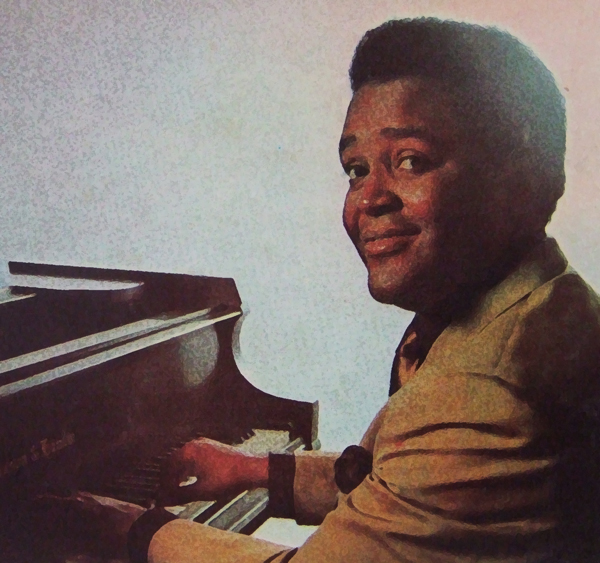
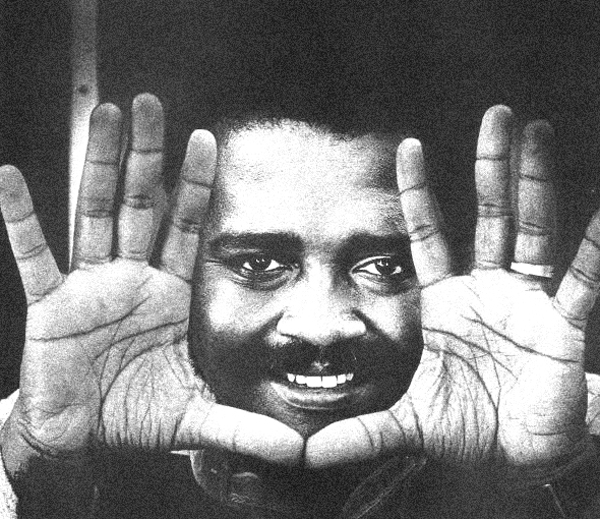
Ray Bryant

Example


Example


Example


Example


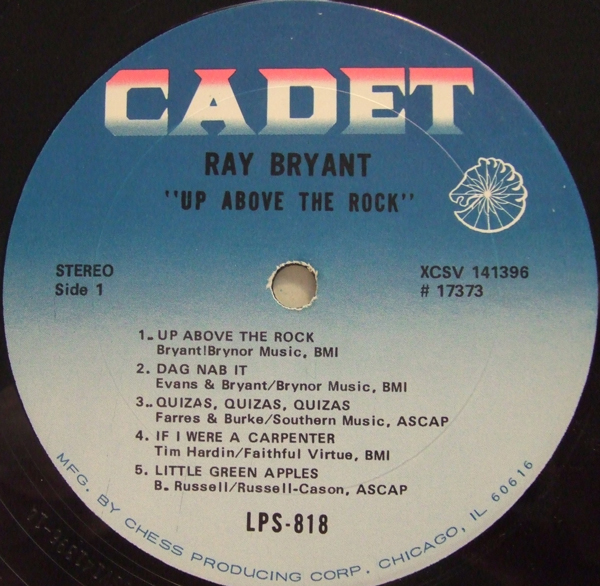
Listen/Download – Ray Bryant – Up Above the Rock

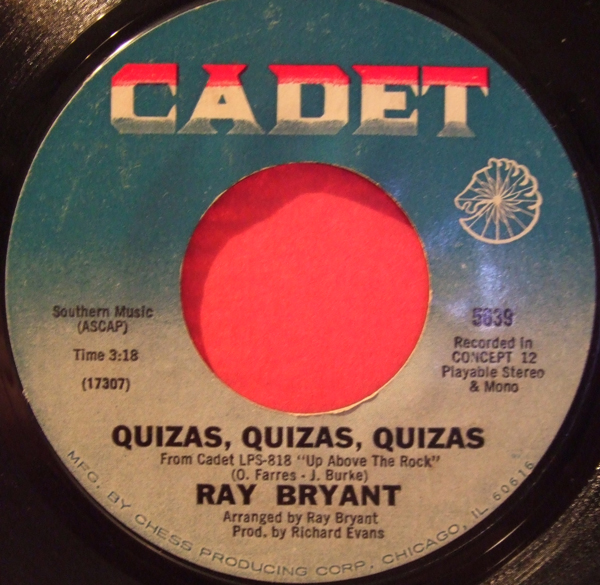
Listen/Download – Ray Bryant – Quizas Quizas Quizas

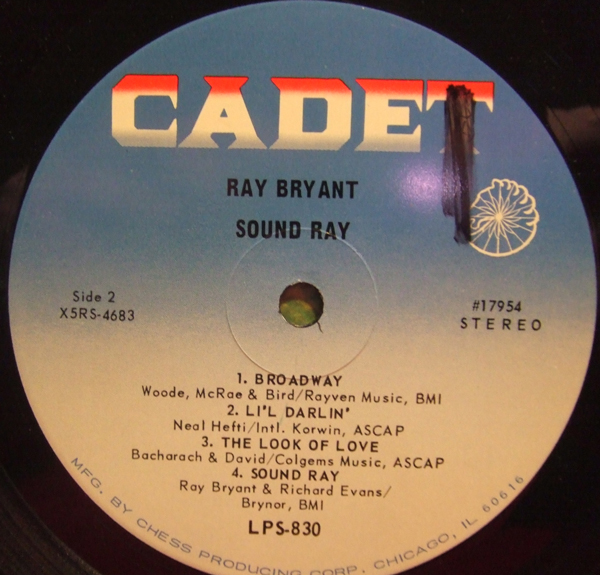
Listen/Download – Ray Bryant – Soundray


Listen/Download – Ray Bryant – Stick With It


Greetings all.

I hope the middle of the week finds you all well.

As promised, I’m going to take a little time to pay tribute to the soulful genius of one of my favorite pianists, the mighty Ray Bryant.

Bryant, who passed on June 2nd was one of the mainstays of soul jazz piano in the 50s, 60s and 70s.

As has been mentioned in this space several times, I have strong feelings about the term ‘soul jazz’, in that so little of the music labeled as such really fits the bill in any meaningful way.

There are veritable mountains of wax with jazzers wading into more popular waters, especially in the 60s, but a jazzbo with a pop cover does not soul jazz make (especially since the style came into being organically).

The truth is, that where many – often purely in the interest of keeping their heads above water (and away from a day job) – jazz musicians took to a more “accessible” style in the 60s, many of them had no real aptitude for it, making for much of the bland and uninspired sounds that so many crate diggers are referring to when they badmouth the style.

The real heart of the sound – as is the case in vocal soul music – can be traced to gospel, wherein jazz and soul intersect on a giant (and wholly imaginary) venn diagram.

As the 50s became the 60s, many jazz musicians (with a concentration on organists, guitarists and saxophonists) while still stretching out on post-bop and modal jazz, began to experiment with gospel and R&B at the same time that those styles were evolving into what would become soul music.

By the early 60s, countless organ (and piano, guitar, sax, vibes and all of the possible combinations and permutations possible) combos were coming out of inner city clubs and into recording studios for labels like Prestige, Blue Note, Argo, Riverside and countless smaller independents and compressing the aforementioned mixtures into 45 sized, jukebox friendly slices.

As the popularity (and sales figures) of straight jazz began to decline, jazz musicians concentrated more on soul and pop jazz, hoping to cross over enough to put a little bread in their pockets. While many of these musicians were merely attempting to cash in, some of them found that they had a natural affinity (whether via age or inclination) for these sounds and found ways to innovate and make them swing.

One of the finest of these was Mr. Ray Bryant.

Bryant came up in Philadelphia (his brother Tommy was a bassist) and played alongside many of the giants of the bebop and hard bop eras.

He started recording under his own name in the 50s, and even found some pop success with his 1960 hit ‘Madison Time’.

The tracks featured today all come from Bryant’s tenure with the Cadet label between 1966 and 1969. He recorded seven albums for Cadet in those years, all a mix of original material, jazz standards and pop and soul cover material. He recorded in small and large group settings, often with the production assistance of none other than Richard Evans.

I’ve included tracks from his two final albums for the label in the 60s (he would return for one more in 1974), ‘Up Above the Rock’ (1968) and ‘Sound Ray’ (1969).

The title track of ‘Up Above the Rock’ is a shade over three minutes of pure brilliance, with a stunning Grady Tate breakbeat that makes it the most sought after (and expensive) of his albums. The mix you’re hearing today is from the album. The 45 mix is a little bit hotter, with the drums and the handclaps higher in the mix (check it out on Youtube).

The group is the trio of Bryant on piano, Ron Carter on bass and Tate on drums, augmented by Snookie Young on fluegelhorn and Dobbie Hiques on trumpet. The track sounds light years ahead of its time. No matter how many times I hear it, I expect someone to start rapping as soon as the piano comes in. If you listen to the way Kool G Rap and DJ Polo flipped it (barely) for ‘On the Run’, it’s not too far removed from the original. It’s about as funky as acoustic piano records get, and a great showcase for Bryant’s heavy, straightforward sound. It’s one of those records that I have to listen to multiple times in a sitting.

The other track from ‘Up Above the Rock’ is Bryant’s cover of Osvaldo Farres’ ‘Quizas Quizas Quizas’. The recording here is taken from my 45 and while still somewhat funky, has a much looser, more swinging feel to it. It was also sampled (with a little more subtlety) by Queen Latifah on ‘I Can’t Understand’.

The two remaining tracks are both from the 1969 ‘Sound Ray’ album. A trio session, recorded with Jimmy Rowser on bass and Harold White on drums, ‘Sound Ray’ is another funky session, produced again by Richard Evans. The album sees Bryant stretching out a little more, but still keeping things locked in the groove.

The title track is a hard charging tour de force (I love the opening duet with the bass and drums) with some wonderful keyboard work by Bryant.

‘Stick With It’ is a much more subdued affair, that sounds like a rebuilt version of Horace Silver’s ‘Song For My Father’ (which, oddly enough was also covered on the album).

Ray Bryant would go on to record for Atlantic, Pablo and EmArcy (among many others) through the 70s, 80s and 90s with his last album being a live, solo set recorded at Rutgers University in 2004.

He was a giant, and will be missed.

See you on Friday.

Peace

Larry


Example


Also, make sure that you check out the POAC link below (click on the logo). It’s a fantastic organization that provides services to our local autism community, with education and recr events, and any contribution you could make would be greatly appreciated.

Example


If you want one of the new Funky16Corners stickers (free, of course) click here for info.

Check out the Funky16Corners Store at Cafe Press

PS Head over to Iron Leg too.


Odell Brown RIP

By , June 14, 2011 11:06 am

Example

Odell Brown and the Organizers (above)
A recent shot of Odell Brown (below)

Example

The Sounds of Odell Brown

Odell Brown and the Organizers – No More Water In the Well (Cadet) from Ducky
Odell Brown and the Organizers – Baby You Just Don’t Know (Cadet) from Mellow Yellow
Odell Brown and the Organizers – Think About It (Cadet) Cadet 45 5624B
Odell Brown and the Organizers – Mas Que Nada (Cadet) from Mellow Yellow
Odell Brown and the Organizers – Ducky (Cadet) from Ducky
Odell Brown and the Organizers – Raising the Roof (Cadet) from Raising the Roof
Odell Brown and the Organizers – Day Tripper (Cadet) from Raising the Roof
Odell Brown and the Organizers – The Thing (Cadet) from Raising the Roof
Odell Brown and the Organizers – The Weight (Cadet) Cadet 45 5624A
Odell Brown – Hard To Handle (Cadet) from Odell Brown Plays Otis Redding
Odell Brown – Respect (Cadet) from Odell Brown Plays Otis Redding
Odell Brown – Nitty Gritty (Cadet) from Free Delivery
Odell Brown – Free Delivery (Cadet) from Free Delivery


Listen/Download – Odell Brown Tribute Mix 97MB/256K Mixed MP3


Greetings all.

As I mentioned on Monday, this week will be devoted entirely to obits/remembrances of musicians who either passed on during the pledge drive, or who’s passing I became aware of during that time.

Monday saw a tribute (starting with an incorrect picture) to the mighty Benny Spellman, and today I bring you something a little bit special to give you an idea of how much I dig the music of the great Odell Brown.

I first became aware of Odell Brown and the Organizers back in the day when my man Haim hepped me to their single ‘No More Water In the Well’. I grabbed a copy and promptly fell in love with the group’s sound.

You all know I’m an incurable Hammond nut, but I’m also a huge jazz fan, and the music of Odell Brown (with and without his band) satisfied both needs quite nicely.

I’ve gone on in this space many times about soul jazz, and how rare it is to find an artist who really brought that particular fusion to purity. Odell Brown was one of those cats.

Born in Louisville, KY, Brown went to Tennessee State A&M before being drafted in 1960. Following his stint in the Army, he moved to Chicago and formed Odell Brown and the Organizers with musicians he’d first connected with in college, Artee ‘Duke’ Payne and Tommy Purvis (tenor sax), Curtis Prince (drums) and Master Henry Gibson (congas).

Example

Indeed he was…

Between 1966 and 1970 Brown recorded three albums with the Organizers (Raising the Roof, Mellow Yellow and Ducky), as well as two solo albums (Odell Brown Plays Otis Redding and Free Delivery). He recorded one more solo album for the Paula label in 1971.

Brown spent the 70s working as a studio musician and musical director for artists like Minnie Riperton, Curtis Mayfield and Marvin Gaye, with whom he eventually co-wrote the mega-hit ‘Sexual Healing’.

He spent much of the 80s battling severe depression, but settled in Minnesota and returned to playing and recording in the 90s.

The albums he recorded with the Organizers, all produced by the legendary Richard Evans are some of the finest material released on the Cadet label in the 60s, and while hard to find (the 45s not so much) are all worth picking up.

His solo albums, minus the twin sax attack of the Organizers, operate at a slightly more soulful frequency, and while also hard to find, are definitely worth whatever it takes to acquire them.

The fact that most of the Cadet catalog remains out of print (particularly Richard Evans projects like the Soulful Strings) is nothing less than a crime.

What I’ve included in this tribute mix (available only as a mixed MP3, no zip file) are my favorite tracks from the Organizers albums and both of Brown’s Cadet solo LPs (I have yet to find a copy of the Paula album).

Hopefully this will serve as an introduction for those unfamiliar with Odell Brown, and maybe pack a few surprises for those in the know.

I hope you dig the sounds, and I’ll be back on Friday.

Peace

Larry


Example


Also, make sure that you check out the POAC link below (click on the logo). It’s a fantastic organization that provides services to our local autism community, with education and recr events, and any contribution you could make would be greatly appreciated.

Example


If you want one of the new Funky16Corners stickers (free, of course) click here for info.

Check out the Funky16Corners Store at Cafe Press

PS Head over to Iron Leg too.


Gil Scott-Heron – The Revolution Will Not Be Televised

By , May 28, 2011 9:22 am

Example

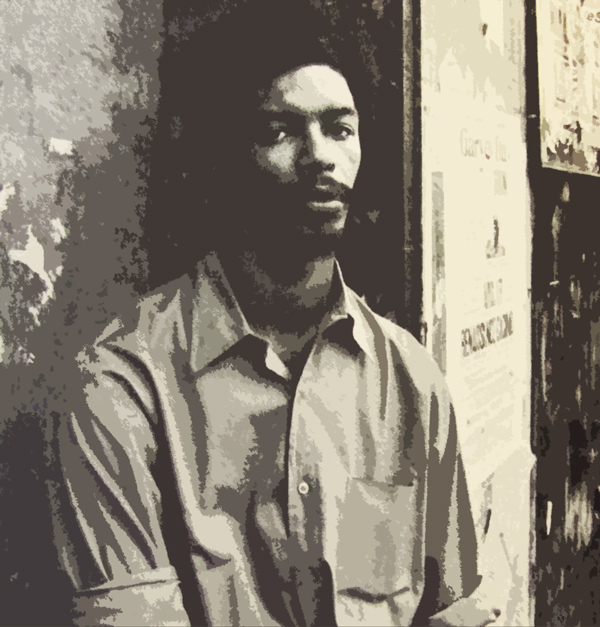
Gil Scott-Heron RIP

Example


Listen/Download – Gil Scott-Heron – The Revolution Will Not Be Televised


Greetings all.

It was last night that rumors, and eventually confirmation of the passing of the mighty Gil Scott-Heron appeared.

In a word, Gil Scott-Heron was deep.

I first became aware of him when I was in high school and saw Scott-Heron and his band performing their funky strike against apartheid ‘Johannesburg’ on Saturday Night Live.

A few years later he was part of the M.U.S.E. No Nukes concerts at Madison Square Garden (unfortunately not on the night I attended) where he laid down ‘We Almost Lost Detroit’, which appeared in the film of the concerts.

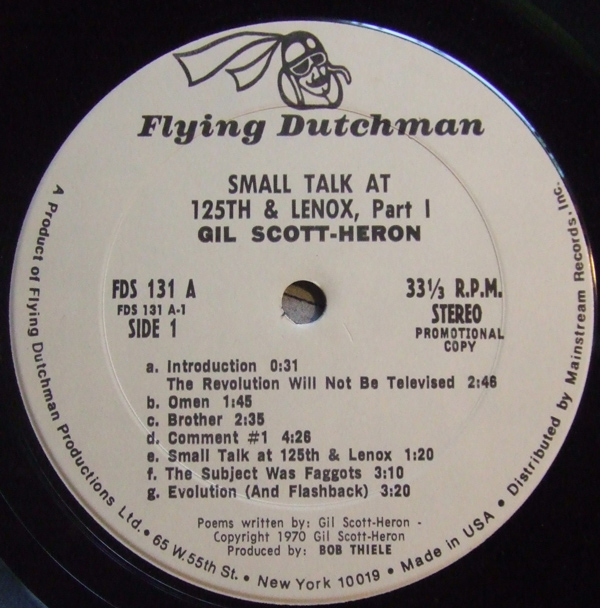
Years later, when I was deeper in the funk and soul game, I was lucky enough to find a copy of his very first album, ‘Small Talk at 125th and Lenox’.

The Gil Scott Heron of 1970 was a much different artist than he would become. His early work was largely spoken word, more the sound of a revolutionary poet than the deeply soulful singer he would evolve into.

‘Small Talk at 125th and Lenox’, featured the track I bring you today, the original version of ‘The Revolution Will Not Be Televised’, a landmark spoken word piece that stands as a stark, verbal blow against the America of 1970, touching on race, politics, war, popular culture and a death of the spirit brought on by television.

It is powerful stuff, in large part because of Scott-Heron’s delivering the text with his deep, sonorous voice over a backing composed only of percussion.

Scott-Heron, who was born in Chicago but raised in Tennessee got his start as an author, writing two novels before the beginning of his recording career.

He met his frequent musical partner Brian Jackson while at Lincoln University in Pennsylvania.

After ‘Small Talk at 125th and Lenox’, Scott-Heron’s record became progressively more musical, though since he was always as much a writer as a musician, they never lost their poetic edge, and as such he became a hugely important influence on the world of rap.

His later years were plagued with drug troubles (and subsequently imprisonment) and failing health. He was able to record a final album ‘I’m New Here’ in 2010, and though the many shadows of his life were present in the periphery, the old, strong Gil Scott-Heron was still there.

He passed yesterday at the age of 62.

He will be missed, deeply.


The Revolution Will Not Be Televised

You will not be able to stay home, brother.
You will not be able to plug in, turn on and cop out.
You will not be able to lose yourself on skag and ,
Skip out for beer during commercials,
Because the revolution will not be televised.

The revolution will not be televised.
The revolution will not be brought to you by Xerox
In 4 parts without commercial interruptions.
The revolution will not show you pictures of Nixon
blowing a bugle and leading a charge by John
Mitchell, General Abrams and Mendell Rivers to eat
hog maws confiscated from a Harlem sanctuary.
The revolution will not be televised.

The revolution will not be brought to you by the
Schaefer Award Theatre and will not star Natalie
Woods and Steve McQueen or Bullwinkle and Julia.
The revolution will not give your mouth sex appeal.
The revolution will not get rid of the nubs.
The revolution will not make you look five pounds
thinner, the revolution will not be televised, Brother.

There will be no pictures of you and Willie May
pushing that shopping cart down the block on the dead run,
or trying to slide that color television into a stolen ambulance.
NBC will not be able predict the winner at 8:32
or report from 29 districts.
The revolution will not be televised.

There will be no pictures of pigs shooting down
brothers on the instant replay.
There will be no pictures of pigs shooting down
brothers in the instant replay.
There will be no pictures of Whitney Young being
run out of Harlem on a rail with a brand new process.
There will be no slow motion or still lifes of Roy
Wilkins strolling through Watts in a Red, Black and
Green liberation jumpsuit that he had been saving
For just the right occasion.

Green Acres, The Beverly Hillbillies, and Hooterville
Junction will no longer be so goddamned relevant, and
women will not care if Dick finally screwed
Jane on Search for Tomorrow because Black people
will be in the street looking for a brighter day.
The revolution will not be televised.

There will be no highlights on the eleven o’clock
news and no pictures of hairy armed women
liberationists and Jackie Onassis blowing her nose.
The theme song will not be written by Jim Webb,
Or Francis Scott Key, nor sung by Glen Campbell, Tom
Jones, Johnny Cash, or Englebert Humperdink.
The revolution will not be televised.

The revolution will not be right back after a message
bbout a white tornado, white lightning, or white people.
You will not have to worry about a dove in your
bedroom, a tiger in your tank, or the giant in your toilet bowl.
The revolution will not go better with Coke.
The revolution will not fight the germs that may cause bad breath.
The revolution will put you in the driver’s seat.

The revolution will not be televised, will not be televised,
not be televised, will not be televised.
The revolution will be no re-run brothers;
The revolution will be live.

Peace

Larry


Example


Also, make sure that you check out the POAC link below (click on the logo). It’s a fantastic organization that provides services to our local autism community, with education and recr events, and any contribution you could make would be greatly appreciated.

Example


If you want one of the new Funky16Corners stickers (free, of course) click here for info.

Check out the Funky16Corners Store at Cafe Press

PS Head over to Iron Leg too.


King Curtis – Pop Corn Willy b/w Patty Cake

By , April 28, 2011 12:01 pm

Example

King Curtis

Example

Example


Listen/Download – King Curtis – Pop Corn Willy
Listen/Download – King Curtis – Patty Cake (Valdez In the Country)


Greetings all.

I hope the end of the week finds you all robust, rosy cheeked and filled to the gills with soul.

I am – as usual – up to my substantial ass in alligators, with an exceptionally busy vacation followed immediately with an equally jam packed week.

I will save my recap of my DJ gigs in Massachusetts (which were a gas) for next week, but I did want to fill out this week’s posting with a very recent acquisition, that has (and this should come as no surprise) an interesting story attached to it.

The first part of our family vacation was occupied with an ongoing, very important errand, and as a result, when an opportunity opened up to do a little on-the-road 45 digging, I was both surprised and very pleased.

I hit a spot in upstate NY, that has – like many record stores that I haunt on the reg – seemed like a case of diminishing returns, i.e., the more I go back, the less there is to look through.

This time out was a different story, and by the time I had worked my way through the soul and funk section I had built up a nice stack of 45s to peruse, including some new (to me) stuff, one longtime want list item, 45 versions of things I previously had only on LP, as well as a couple of nice items for the trade box.

Among the new things was a King Curtis 45 with two tracks that were both previously unknown to me.

The one that caught my eye was ‘Pop Corn Willy’, which seemed – thanks to the mention of the funky snack food in the title – to be part and parcel of the 1969 dance craze.

Once I got it to the listening station, my suspicions were confirmed. It was extremely funky, and fast moving, and I gave it a spin when I took to the decks in Northampton, MA.

‘Pop Corn Willy’ is one of those cheap 45s that would likely be worth a nice chunk of change if it were rarer.

I gave the other side a brief needle drop, but since it didn’t grab me right away, I didn’t give it much thought.

When we finally returned home, and I got all my ducks in a row – including the acquisition of a brand new DJ coffin (not something you bury a DJ in, but rather a road case for two turntables and a mixer) – I sat down to digimatize the new records so that I might include them in next week’s edition of the Funky16Corners Radio Show (which by the way will air, on schedule, this Friday evening at 9PM on Viva Radio), I decided to give the King Curtis flipside a closer listen, and it’s a good thing I did too.

When I put the needle on the record, the song coming out of the speakers was pleasant enough, but after about 20 seconds it started to sound oddly familiar, and by the time the chorus rolled around I realized that although the song was titled ‘Patty Cake’, what I was actually hearing was a version of one of my favorite Donny Hathaway tunes, ‘Valdez In the Country’.

I’d first heard the song in a cover by the Soulful Strings, then by Hathaway himself, and eventually in a smoking version by Cold Blood.

The thing that bugged me though, was why it had been recorded by Mr Ousley under a different title.

As it turns out, this may very well have been the initial waxing of this composition. Hathaway himself (credited here, oddly as ‘Don Hathaway’) wouldn’t record it until 1973 on his ‘Extensions of a Man’ LP, after the Soulful Strings, Cold Blood, Nite Liters and Black Sugar (it would later be covered by George Benson).

As it turns out, the keyboardist on this session (recorded in August of 1969) was none other than Hathaway himself*, which would explain where King Curtis got his hands on the song. I don’t know for sure, but it’s possible that Curtis changed the title (the song would only appear on a non-LP 45) in an effort to keep it simple for the juke boxes and the dance floor. It’s also possible that it had yet to take on the ‘Valdez…’ title (I’ve never been able to discover the origin or significance of the title), though the Soulful Strings version, also recorded in 1969 carried the longer title.

That all said, it’s a great song (one of my favorite instrumentals), and I hope you dig it.

Have a great weekend, and I’ll see you all on Monday.

Peace

Larry


Example

*Interestingly, Hathaway also plays on (as well as produced and arranged) the Cold Blood version, and may very well have had something to do with the Soulful Strings version as well. He was clearly proud of the composition and did a lot to get it out there.


Also, make sure that you check out the POAC link below (click on the logo). It’s a fantastic organization that provides services to our local autism community, with education and recr events, and any contribution you could make would be greatly appreciated.

Example


If you want one of the new Funky16Corners stickers (free, of course) click here for info.

Check out the Funky16Corners Store at Cafe Press

PS Head over to Iron Leg too.


Bo Diddley – I Can Tell

By , April 7, 2011 9:35 am

Example

Bo Diddley by Mat Vullo

Example


Listen/Download – Bo Diddley – I Can Tell


Greetings all.

The end of the week is finally here, and I hope you’ve all gotten good and oiled up with this week’s mix as your soundtrack.

The track I bring you today ought to put a nice cap on the whole deal, but first some news you can use.

This Friday night – just like every Friday night – sees the return of the mighty Funky16Corners Radio Show, on the equally mighty Viva Radio. This is the thang where you get to sit down with me (or at least the dulcet tones of my voice) and some of the best in funk, soul, jazz and rare groove vinyl for an hour of sheer, unadulterated musical pleasure. If you can’t be there during the broadcast, you can always fall by over the weekend and pick yourself up an MP3 of the show, or several dozen past shows to stuff into your iPod.

Example

Also, I will be returning to Spindletop @ Botanica (47 E Houston St, NYC) this coming Monday (4/11) to join my man Perry Lane for some more of that good, vinyl-based groove grease. This will be the first gig of an unusually busy month for yours truly, and I’ll be bringing along a pile of new arrivals/discoveries, so if you’re in the area, and feel like a frosty beverage and some hot music, join us.

You should also pop on over to Fleamarket Funk, where my man DJ Prestige has undertaken a redesign, as well as added a new feature called ‘Big Ups’, in which yours truly has been featured. Make sure you stop by to take a look.

I’ll assume that as soon as this page loaded in your browser, the first thing you noticed was the exceedingly groovy illustration of our friend Mr. McDaniels by Mat Vullo.

Mat and I have been Facebook pals for a long time, he an admirer of the Funky16Corners Blog, and I digging his groovy illustrations. We put our heads together and settled on an illo for a Bo Diddley feature, but you really need to go by his site and check out his other stuff. If you dig the sounds herein, you will most certainly dig the visuals over there.
Many thanks to Mat.

That all said, the tune I bring you today is yet another Asbury Lanes Garage Sale find. It was one of those ‘I’ve spent most of my dough and I’m on my way out the door and I think I’ll paw through one last box before I split’ things, and good thing too since I dig me some Bo Diddley and don’t have all that much of his original vinyl in the crates.

He was one of the true elemental forces of the Chess/Checker Chitown arsenal, alongside Muddy Waters, Howling Wolf and Chuck Berry (and many others, but those are the stony visages on that particular Mt Rushmore).

The cool thing is, though Bo has shared roots with some of his labelmates, in many ways he is the very definition of sui generis, straddling the worlds of the electric blues and rock’n’roll, existing on a stylistic island all his own. This is not to say that he did not at times record what might be seen as conventional blues or rock, but rather that at his best, with tunes like the eponymous ‘Bo Diddley’, he created something without equal.

One need only look at his impact on the British Invasion (and all that flowed from it) to realize that that darkness you sensed was actually his titanic shadow draped over the whole thing. London in 1963 was almost like Jackson Pollock had dipped his brushes in a huge vat of Bo Diddley and splattered it every which way. The Kinks, Pretty Things (named for a Bo song with no less than four of his tunes on their first album), Johnny Kidd and the Pirates, Rolling Stones, Yardbirds and many others, all quaking in their pointy boots from the reverberato shock wave started by Bo Diddley’s massive stomp and rightly so because even though this lot liked to pay tribute to Messrs Morganfield, Burnett, Reed et al, nobody smacked them in the gob like Bo Diddley, because where all of the others were deep and menacing, Bo Diddley was also fun in his own, oblong, horn-rimmed, wobble-legged way.

Bo was the shit, and the tune I bring you today (which I first heard by the aforementioned Pirates, who lay it down with a rockabilly twang which is also cool since Bo’s version has a little country in it) is just another bit of evidence in that case.

‘I Can Tell’ is Bo’s rough-edged lament at a love cast aside, packed end to end with his ringing guitar, Jerome’s maraccas, and someone pumping a bass guitar con brio.

The fact that he manages to namecheck no less a light than Charlie Brown – the greatest sack of sad that the world has ever known – as the guy that elbowed in on his action speaks volumes.

You can just see his eyes rolling back into his head when he finally loses his shit and shouts ‘I Can Tell You Don’t Love Me No More!!!’

Heavy, heavy stuff, and if someone doesn’t get their shit together and erect a huge statue in his image soon…well…I don’t know what I’ll do but it ain’t gonna be nice.

That said, have a lovely weekend and I’ll see you all on Monday.

Peace

Larry


Example


Also, make sure that you check out the POAC link below (click on the logo), in regard to the April 2nd walk. The whole Funky16Corners gang will be walking in support of autism services, and any contribution you could make would be greatly appreciated.

Example


If you want one of the new Funky16Corners stickers (free, of course) click here for info.

Check out the Funky16Corners Store at Cafe Press

PS Head over to Iron Leg too.


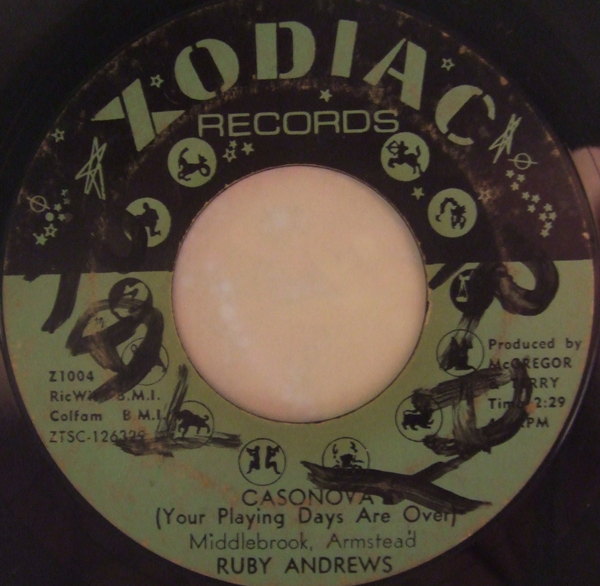
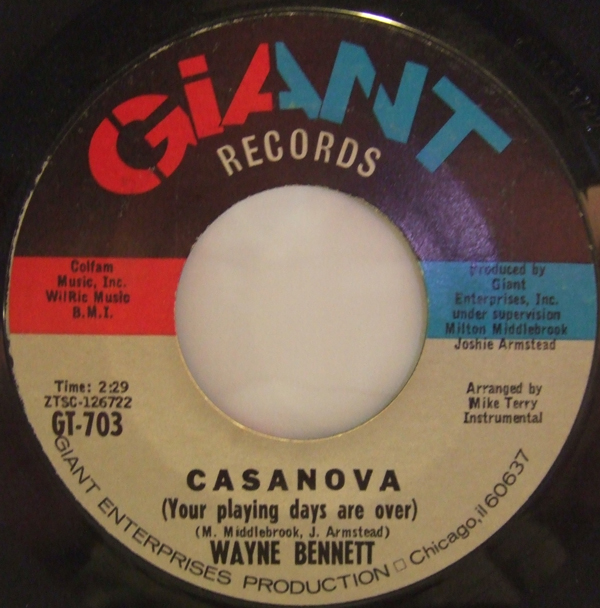
Ruby Andrews / Wayne Bennett – Casanova (Your Playing Days Are Over)

By , January 18, 2011 3:34 pm

Example

Miss Ruby Andrews

Example

Example

Listen/Download – Ruby Andrews – Casanova (Your Playing Days Are Over)

Listen/Download – Wayne Bennett – Casanova (Your Playing Days Are Over)

Greetings all.

I hope that the middle of the week finds you all well.

The tune(s) I bring you today represent one of the finest ‘love gone bad’ soul songs of the 60s, as well as a groovy instrumental spin on same.

Ruby Andrews was a Mississippi-born, Chicago-based singer who recorded for, and scored a string of R&B hits with the Zodiac label between 1967 and 1971.

I first heard Ruby via a mix tape that included the pulsing funk of ‘You Made a Believer Out of Me’, which was a Top 20 hit in 1969. That record was a big fave of mine for a few years before I finally scored a copy of Ms. Andrews biggest hit, the tune I bring you today, ‘Casanova (Your Playing Days Are Over)’.

An R&B Top 10 hit (and Pop Top 50) in the summer of 1967 (with Casanova spelled ‘Casonova’ on the label), ‘Casanova (Your Playing Days Are Over), co-written by Joshie Armstead and Milton Middlebrook, and bearing a characteristically fantastic arrangement by the mighty Mike Terry, is a dramatic, emotional record that sounds years ahead of its time.

The second version of the tune came to me quite by accident.

Last year, during the Funky16Corners Pledge Drive and the premier of the Funky16Corners Soul Club, my man Tarik Thornton included the track ‘Rocking Funky Broadway’ by Wayne Bennett in his mix.

Not too long after that I spied that record on a sale list and picked it up.

It wasn’t until it fell through the mail slot that I discovered that the flip was a version of ‘Casanova’.

Bennett was a journeyman jazz/blues guitarist who had played on some of Bobby Bland’s landmark recordings.
His version of ‘Casanova’, basically his guitar lead overdubbed onto the original backing track from Andrews’ 45, was released on the Chicago-based Giant label (for which Armstead herself recorded some excellent 45s) in 1968. Bennett lays down the melody line with a bold, jazzy flair, creating a more memorable performance than one would expect from such a reworking.

There were later cover versions of the song by Loleatta Holloway (1975 Aware) and the disco group Coffee (1980 DeeLite).

I hope you dig the tunes, and I’ll see you all on Friday.

Peace

Larry

Example

If you want one of the new Funky16Corners stickers (free, of course) click here for info.

Check out the Funky16Corners Store at Cafe Press

PS Head over to Iron Leg for some obscure, New England garage pop.

Lorna Bennett – Breakfast In Bed

By , January 6, 2011 3:18 pm

Example

Miss Lorna Bennett

Example

Listen/Download – Lorna Bennett – Breakfast In Bed

Greetings all.

I hope that you’re all weathering the weather (there’s got to be a better way to phrase that) better than I am. This cold is kicking my ass. The first few hours of the day should be spent wrapped securely in a warm blanket, easing into a mellow state of awake-ness, instead of rolling out of the sack and into 20 degree temperatures in the space of 45 minutes, which is what I did this morning.

Fortunately, after getting the little Corners on the bus, and running various and sundry errands I have returned to my desk, deep inside the well-heated, secure Funky16Corners command center.

Before we get started, I should remind you that this Friday night at 9PM – as is always the case – the Funky16Corners Radio Show will be taking to the airwaves, this week with an upbeat, hard-charging Northern Soul special guaranteed to get you out on the floor. Make sure to fall by Viva Radio, or if plans preclude timely listening, hit the blog on Saturday to pick up an MP3 of the show, which you may listen to at your leisure.

Example


I will remind you once again that I’ll be taking part in the Spindletop night with DJ Perry Lane next Monday night (1/10) , beginning at 10PM at Botanica, 47 East Houston Street (between Mulberry and Mott) in New York City. There will be many shades of organ grooviness, as well as vibes, snappy drums and what not.

Now that I’ve wasted space complaining about the cold,  what better time for a little bit of island soul?

I have to admit, although I featured the Baby Washington version of ‘Breakfast In Bed’ in this space back in 2006, the first time I ever heard the song was via the 1988 cover version by UB40 and Chrissie Hynde.

At the time it was getting some airplay on the local alternative station, as well as on MTV. I dug the tune a lot, and eventually picked up a radio station promo CD single (no doubt liberated from the aforementioned local station and resold), which I still have banging around somewhere.

I was unaware that the song was a cover until I saw the writing credit for Eddie Hinton and Donnie Fritts, and even then I had no idea who did the original version.
What I wouldn’t discover until many years later, was that the UB40/Hynde version was in its way a cover of a cover (cover once removed??).

The song was written by Hinton and Fritts for Dusty Springfield’s 1969 ‘Dusty in Memphis’ album. Shortly after that, Baby Washington recorded her own – in my opinion, superior – version of the song (eventually released on Cotillion)*.

Oddly enough, for such a finely crafted piece of Southern soul neither Springfield nor Washington’s version of the song met with any chart success.

Flash forward to 1972, when a young Jamaican singer named Lorna Bennett recorded her own version for the Harry J label.

Produced by Geoffrey Chung, Bennett’s version of the tune was a #1 hit in Jamaica, also garnering a substantial amount of airplay in the UK (which is likely where the boys in UB40 heard it first).

Though Bennett’s version of ‘Breakfast In Bed’ lacks the dynamic shifts and drama of the Springfield and Washington recordings, it does have a certain pleasant, laid back vibe (repeated in the UB40/Hynde version) that locks in with the reggae beat.

Bennett went on to have a few more Jamaican hits (including a cover of the Dixie Cups’ ‘Chapel of Love’) before retiring to practice law in 1974. She returned to performing in 2001.

I hope you dig the tune, and I’ll be back on Monday.

Peace

Larry


Example

*There were also early covers by Carmen McRae (1970) and Shirley Bassey (1971)

If you want one of the new Funky16Corners stickers (free, of course) click here for info.

Check out the Funky16Corners Store at Cafe Press

PS Head over to Iron Leg for a garage cover of a soul classic

Sweet Delights/Delights Orchestra – Baby Be Mine b/w Paul’s Midnight Ride

By , December 2, 2010 12:33 pm

Example

The Sweet Delights

Example

Listen/Download – The Sweet Delights – Baby Be Mine
Listen/Download – Delights Orchestra – Paul’s Midnight Ride


Greetings all.

The end of the week is upon us, and despite a couple of stumbling blocks (like my weak back), it went pretty fast.

Chanukah celebrations are underway (the Funky16Corners Compound is a multi-cultural thang where we light both the menorah and the Christmas tree) and everybody is tired but happy.

Before we get started I should mention that tomorrow night the Funky16Corners Radio Show on Viva internet radio arrives on the interwebs at 9PM and will be filled, as usual, with the best in funk, soul, jazz, rare groove and disco for your eager ears.

Example

I should also remind you that the new Funky16Corners stickers are now available to one and all if you send a self-addressed, stamped envelope (unstamped if you are outside of the USA) to Funky16Corners, c/o Grogan, 80 New Brunswick Ave, Brick, NJ 08724.

The tunes I bring you today come from both sides of a single 45 that has had a place in my Philly crates for what might be described as a long-ass time.

I always dug it, and was intrigued by it (more on that in a minute) but it is also safe to say that I as mystified by it as well.

The artists listed on the disc are the Sweet Delights (vocal side) and the Delights Orchestra (instrumental).
When I found this one, I already had another 45 by the Delights Orchestra (also on Atco), ‘King of the Horse’ b/w ‘Do Your Thing’, both sides of which have appeared in Funky16Corners Radio podcasts.

I grabbed that disc initially because it was quite obviously an attempt to cash in on the ‘Horse’ craze started by Cliff Nobles and Company in 1968. Check out Funky16Corners Radio v.22 – Horse Power for a look at a bunch of discs on the same tip.

That said, it was probably a year or so later that I found today’s 45s during a search in the wilds of the intertubes. When the disc fell through the mail slot and I gave it a spin I was pleasantly surprised to discover the vocal side of the 45.

Unfortunately I was unable to turn up any information on the group, assuming – due both to the similar sound, and the familiar names of Frank Virtue and Johnny Stiles (post-Harthon) on the label – that what I was hearing was yet another iteration of the stalwart Philly rhythm section that played on so many amazing records over the years.

I had no inkling whatsoever that the Sweet Delights were anything but an anonymous group of singers assembled for the session.

However, sometimes – like a frozen mammoth exposed by a receding glacier – if you wait long enough, all will be revealed.

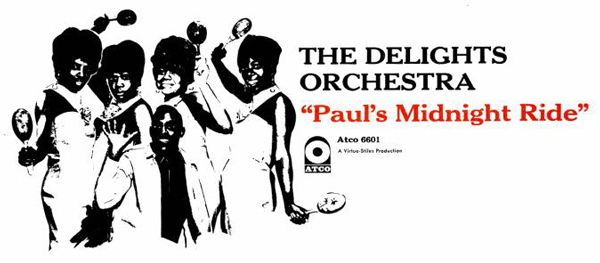
During a perusal of an old back issue of Billboard magazine, I happened upon an ad for new releases on the Atco label that included the image of the Sweet Delights you see at the top of this post.

That was a nice surprise, and it spurred me on to dig a little deeper.

When I did – thanks to an article at the Classic Urban Harmony web site (which includes a much nicer picture of the group) – I discovered that one of the co-writers of ‘Baby Be Mine’, Eddie Edgehill had a long history in Philadelphia doowop groups like the Valentines and the Del Knights, eventually going on to form and record the Sweet Delights (which included his wife Geri Edgehill, Betty Allen, Valerie Brown, Grace Montgomery Allison and the group’s sole male member, and the other co-writer of the song, Albert Byrd).*

The Sweet Delights 45 was released in 1968, with the Delights Orchestra two-sider coming in 1969. ‘Baby Be Mine’ is a fast moving soul/funk tune that bears a passing resemblance to Jackie Wilson’s ‘Higher and Higher’.

Oddly, it was the instrumental side of the 45 that gained some traction on the radio, which is probably why the Sweet Delights are pictured in the ad, but the text is promoting the Delight’s Orchestra.

There’s also an interesting footnote in regard to ‘Paul’s Midnight Ride’. I found a post on the Numero Group (issuers of many amazing compilations) blog about the track (‘Paul’s Midnight Ride’) being lifted and re-used on two other 45s, one by DJ Tim Jacob in Wichita, Kansas, and the other by Sonorose ‘Gay Poppa’ Rutledge in Shreveport, Louisiana (though if you listen to the sound samples provided at the blog, both records sound exactly the same, with the same vocal laid over the ‘Paul’s Midnight Ride’ track). How this track made it’s way onto these records is anyone’s guess, but I’m willing to bet that the ‘borrowing’ was not officially sanctioned by the track’s creators (none of whom are seem to be credited on the labels).

Interesting, and a long way to travel for an obscure soul track.

I hope you dig it, and I’ll be back on Monday.

Peace

Larry


Example

*For some reason ‘Paul’s Midnight Ride’, basically the instrumental bed of ‘Baby Be Mine’ is credited on the 45 to Frank Virtue, Johnny Stiles and arranger Bobby Martin

Check out the Funky16Corners Store at Cafe Press

PS Head over to Iron Leg

Nina Simone – See Line Woman

By , November 28, 2010 3:30 pm

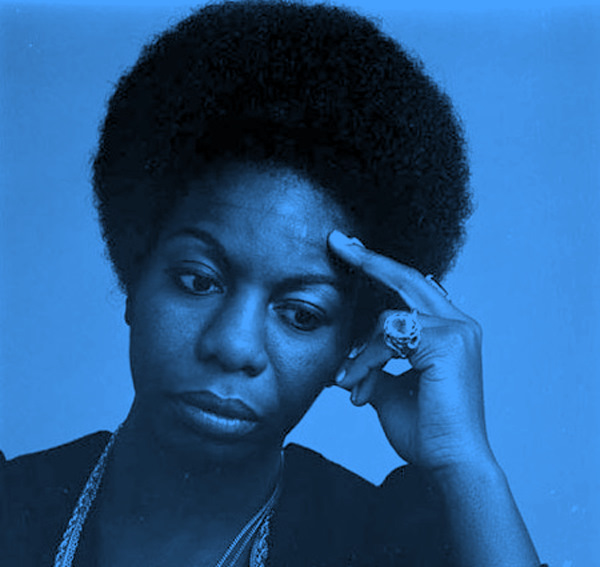
Example

Miss Nina Simone

Example

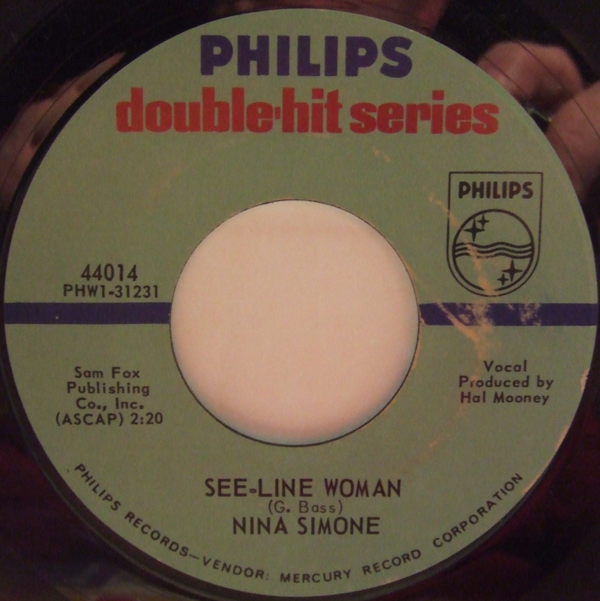
Listen/Download – Nina Simone – See Line Woman


Greetings all.

I return to you, post-Thanksgiving having enjoyed a delightful holiday weekend with the family, despite having thrown my back out the day before the turkey fest.

Fortunately, while I was unable to climb trees or bend down to pick up lucky pennies, I was able to indulge in turkey, stuffing and sweet potatoes, so I can’t very well complain.

I got some reading done and we took the little Corners to the symphony for the first time as well, which is always a good thing.

I hope everyone dug last week’s mix, as well as Friday night’s Funky16Corners Radio Show (archived and available for download as we speak).

I’m gonna get the week started with some heat from the mighty Nina Simone.

Though she certainly had funky and soulful numbers in her vast catalog, it’s neither accurate nor fair to refer to Nina Simone as a funk or soul artist.

She preferred to think of herself as a jazz singer (which she was at times) but it’s probably more accurate to see her as a cross between an old school chanteuse, i.e. interpreter of songs and what used to be called a singer-songwriter.

The breadth of her repertoire is both stunning and daunting. During her career, which spanned five decades, Simone recorded for a wide variety of labels, often re-interpreting material many times over. The fact that her records have been repackaged so many times, in so many configurations makes focusing on her art all the more difficult.

Earlier this year I read ‘Princess Noire: The Tumultuous Reign of Nina Simone’, Nadine Cohodas exhaustive, and exhausting biography of the musical giant.

Simone led a troubled life informed by her youth in the segregated south, racial injustice, a chronic inability to find an audience of long standing as well as a mounting struggle with mental illness.

Though Simone is best known for her interpretations of standards, as well as introducing songs like ‘Don’t Let Me Be Misunderstood’ (taken into the pop charts by the Animals), her most far reaching recording (for a few different reasons) is today’s selection ‘See Line Woman’.

A reinterpretation of a southern folk song/rhyme, first recorded in Mississippi in 1939 by a Library of Congress field researcher.

Nina Simone recorded it in 1964, and to say that her version could be described as epic is almost an understatement.

Featuring Simone’s powerful voice over a backing of percussion (and hand claps) and flute, with call and response backing by her band, ‘See Line Woman’ could be almost be described as funky.

I wouldn’t make any assumptions about the lyrics, since they seem to have changed over the decades*, and there appears to be some question as to what they originally were, including the possibility of coded messages from the Underground Railroad.

If you listen to the original field recording of sisters Christine and Katherine Shipp (you can hear a sample here) , it is immediately apparent that the basic framework of Simone’s version was present in 1939 (though much more explicitly as a kind of playground rhyme).

It is also obvious, once you listen to today’s selection that Simone, while reaching back into the warp and weft of southern culture, took the song into an entirely new place, building into it a sense of urgency, drama and perhaps even menace.

‘See Line Woman’ explodes with the power of an incantation.

It is without a doubt, some seriously deep stuff, not to be taken lightly, and a landmark in the long journey of Nina Simone.

Simone’s re-imagination of the song also launched it into the future.

It was covered (quite successfully) in 1967 by the Easybeats, and then again in the 90s (also very cool) by Feist, both versions (which can be heard on Youtube) borrowing heavily from Simone’s.

I hope you dig it.

See you on Wednesday.

Peace

Larry


Example


*
See this Wikipedia entry for a look at the variations the song has taken over the years.

Check out the Funky16Corners Store at Cafe Press

PS Head over to Iron Leg

Funky16Corners Radio v.90 – Soul In Harmony

By , November 21, 2010 3:03 pm

Example

Funky16Corners Radio v.90 – Soul In Harmony

Playlist

Superlatives – I Don’t Know How To Say I Love You (Don’t Walk Away) (Westbound)
Broadways – Sweet and Heavenly Melody (MGM)
Hesitations – Stay In My Corner (Kapp)
Ethics – Think About Tomorrow (Vent)
Soul Brothers Six – I’ll Be Loving You (Atlantic)
Blue Notes – Never Gonna Leave You (Uni)
Magictones – I’ll Make It Up To You (Westbound)
Little Anthony & the Imperials – It’s Not the Same (Veep)
Intruders – Everyday Is a Holiday (Gamble)
Artistics – What Happened (Brunswick)
Platters – Sweet Sweet Lovin’ (Musicor)
Ambassadors – A.W.O.L (Arctic)
Precisions – You’ll Soon Be Gone (Drew)
Radiants – I’m Glad I’m the Loser (Chess)
Originals – Love Is a Wonder (Motown)
Intrigues – I’m Gonna Love You (Yew)
Volcanos – You’re Number One (Arctic)
Vontastics – You Can Work It Out (St Lawrence)
Unifics – Which One Should I Choose (Kapp)
Formations – Love’s Not Only For the Heart (MGM)
Producers – Love Is Amazing (Huff Puff)
Parliaments – Time (Revilot)
Four Sonics – It Takes Two (Sport)
Masqueraders – I Don’t Want Nobody To Lead Me On (Wand)
Magnificent Men – Peace of Mind (Capitol)


Listen/Download 110MB/256kb Mixed MP3

Download 81MB Zip File


Greetings all.

Thanksgiving week is here (at least in the US), and this year I have lots to be thankful for, as well as lots to do.

I’ve decided to drop this mix today, and pretty much take the rest of the week off.

There will be a new episode of the Funky16Corners Radio Show on Viva radio this Friday at 9PM, so make sure you check that out, should you be passed out next to the internet, in a turkey and pie induced food coma.

Funky16Corners Radio v.90 – Soul In Harmony is one of those mixes that has been cooking (in my head, anyway) for a long time.

I’m not sure how much it has been visible here on the blog (anyone have time lapse footage of the last five years?), but my tastes – often spurred on by a periodic excavation in my record room – are always evolving.

Back in the day, when I first started to collect soul 45s, it was all about the rough and ready Southern sound, fast moving and loud.

It would be years before I really started to examine soul ballads, and then I started to dig into funk, and then Northern Soul, then to disco and on and on, hopefully ad infinitum.

The latest spike on the evolutionary time-line popped up sometime in the last year, spurred on by the sounds of sweet soul.

The AM radio of my youth was filled with bands like the Chi-Lites, the Stylistics, Blue Magic and others, and to be honest, it all struck me as a little mushy, but then again I was 10 years old.

As I got older, and started to listen and dig, ever deeper into the sounds of soul, I discovered a fair amount of sweeter, soul harmony stuff, often on the B-sides of more upbeat, aggressive records, and as is often the case, despite the comparative ‘lightness’ of some of these records, I was drawn in by what always grabs me, that being good songs.

The first record in this style that really knocked me out was the Intruder’s ‘A Love That’s Real’ still one of my favorite records.

Thanks to both geographic proximity and the quality of the music, I’ve collected Philly soul for a long time, and one thing the cats in Philly knew how to create was solid harmony soul. Almost a third of the records I put into this mix are by Philly groups, another third from Detroit or Chicago, and the rest spread over the map (including one by my Jersey Shore homeboys the Broadways).

The importance of tight harmony singing has been a hallmark of black music, from the Mills Brothers and the Ink Spots in the 30s and 40s, countless groups in the 50s and of course everything in this mix, from the classic soul era.

There’s really something special about harmony singing. Done well, it’s not just an accidental meshing of random voices, but rather an aural tapestry woven from perfectly complementary elements.

The ‘classic’ soulful blend, with a tenor, or sometimes baritone lead, a bass and often someone capable of singing in falsetto provides a basic sound, but when some (or all) of these roles are filled by extraordinary singers the end result is something magical.

All of the songs in this mix hail from between 1966 and 1970, a period when a certain maturity and creative growth was on the rise in soul music, when the finest groups intersected with great writers and producers to make music of increasing sophistication and depth.

Though there is a general stylistic thread running through this mix, the tempos vary between pure balladry, upbeat, danceable soul and slightly rougher edged sounds.

There are a few songs that have appeared here before, but when I started assembling the playlist, I knew that they had to be included.

Things get started with the truly amazing ‘I Don’t Know How To Say I Love You (Don’t Walk Away)’ by the mighty Superlatives. I have sung the praises of this record before, but it certainly can’t hurt to hear it again. The combination of sweet vocals, heavy drums and that stellar arrangement are truly amazing.

The Broadways, without any question the greatest soul group to come out of the Jersey Shore recorded two solid 45s for MGM. Their ‘You Just Don’t Know’ is a staple of my Northern Soul sets, and while ‘Sweet and Heavenly Melody’ also packs a driving beat, it has a lushness to it (how about those strings) that sets it apart.

I don’t know much about the Hesitations. I’ve seen their records – often packed with covers – for years, but only bought on for the first time a few months ago. ‘Stay In My Corner’ is a marvel, with the singers alternating leads over dynamic backing vocals.

The Ethics recorded a series of excellent 45s for Philadelphia’s Vent label in the late 60s, including the Northern classic ‘Look at Me Now’. ‘Think About Tomorrow’ is a much slower, much sweeter, falsetto-led ballad that was clearly tailored to reflect the sounds that Gamble and Huff were creating at the same time.

One of the rougher sounding, yet oddly pretty songs in this mix is ‘I’ll Be Loving You’ by the Soul Brothers Six. The flipside of the classic ‘Some Kind of Wonderful’, ‘I’ll Be Loving You’ features what is, in comparison to most of the records in this mix, remarkably spare instrumentation, with rhythm guitar, thumping bass, drums and tambourine, all sounding like it was recorded in one take. The real star here, aside from John Ellison’s wonderful lead vocal, is the second guitar, which has a kind of chiming overtone to it that from a distance sounds like vibraphone accents. The more I listen to this one the more I love it.

The next cut is by the Blue Notes (as in Harold Melvin and…). Right before they began their run of hits with Philadelphia International, the group recorded two 45s for the Uni label. ‘Never Gonna Leave You’ (from 1969) was the B-side of the funky ‘Hot Thrills and Cold Chills’. The 45 was reissued a few years later, no doubt to capitalize on the success of their PI hits.

‘I’ll Make It Up To You’ by the Magictones is the bottom half of one of the truly great Detroit soul 45s (the A-side being their epic cover of the Parliaments’ ‘Good Ole Music’). Much like the Superlatives record (also released on Westbound), the Magictones juxtapose their harmonies with a heavy background, including some tasty electric sitar.

Though they’re best known for their early, doowop sides, Little Anthony and the Imperials recorded well into the classic soul era, including and excellent run of 45s for the Veep label between 1966 and 1969. ‘It’s Not the Same’ which features Anthony Gourdine’s unmistakable falsetto, and a classy arrangement (in which the Imperials are often doubled by female backing singers), bears a slight (but not overpowering) similarity to ‘Goin’ Out of My Head’ (also from 1966).

Speaking of Philadephia soul, there are few groups who were as successful – artistically and on the charts – as the mighty Intruders. ‘Everyday Is a Holiday’ (from 1969) is a great showcase for their unique harmonies and a muscular production and arrangement by Gamble and Huff. Listen closely to the bass and drums (almost funky), as well as the horns and staccato piano accents in the verse.

Chicago’s Artistics were reliable hitmakers for the Brunswick label in the late 60s. ‘What Happened’ is another record that seems to run on the outskirts of funk, as well as displaying the influence of the Temptations.

Another group with solid roots in the doowop era, that also made some great soul records was the Platters. Though they had few (if any) original members by the time they recorded ‘Sweet Sweet Lovin’ in 1967.
Featuring a great lead vocal by Sonny Turner, ‘Sweet Sweet Lovin’ is typical of the kind of upbeat, danceable soul the group was making in this period.

We head back to the City of Brotherly Love with the Ambassadors. One of the truly great Philly bands of the late 60s and early 70s, the Ambassadors recorded some excellent 45s for Atlantic before moving on to Arctic records where they would record several outstanding 45s and an LP. They were adept a certain brand of funky soul, best displayed on 1969s ‘A.W.O.L.’.

When I wrote about the Precisions ‘You’ll Soon Be Gone’ back in 2008, I compare the sound of the record with a lot of the later period stuff that the Parliaments recorded for Revilot (it probably featured a lot of the same musicians. It has a much harder sound than their other Drew 45s.

Chicago’s Radiants recorded some of my favorite soul 45s of the 60s. By the time they recorded ‘I’m Glad I’m the Loser’, their lead vocalist Maurice McAlister had departed. I’m not sure who’s singing lead on this one, but he tears it up.

The Originals recorded a string of great records for Motown in the late 60s, their biggest hit being 1969s ‘Baby, I’m For Real’. ‘Love Is a Wonder’ is a brilliant bit of late 60s Motown, mixing tight, tight harmonies and a powerful arrangement. The lead vocalist sounds like someone Daryl Hall probably spent a lot of time listening to.

Another great tune that bears a passing resemblance to a previous success is the Intrigues ‘I’m Gonna Love You’. The Philadelphia group hit the charts in the summer of 1969 with ‘In A Moment’, a song with a similar vibe and arrangement to the tune in this mix. They recorded a number of cool 45s for the Yew label and hit the R&B (and occasionally Pop) charts a few times between 1969 and 1971.

If you’re a regular visitor to Funky16Corners, you’ll already know that the mighty Volcanos are one of my all time favorite soul groups. Led by singer Gene Faith (born Eugene Jones), the Volcanos recorded some of the finest soul singles to come out of Philadephia in the 1960s for the Arctic and Harthon labels. They had the instrumental backing of the core of the famed Philly rhythm section and material from some of the best songwriters around. ‘You’re Number One’ is a bright, fast moving dancer with lots of sweet background harmony lifting Faith’s lead. Many of the Volcanos went on to form the core of the Trammps who went on to much success in the 70s.

The Vontastics (who took their name from Chicago’s black radio powerhouse WVON) recorded a couple of truly amazing 45s for a variety of Chitown labels (mostly St. Lawrence) between 1965 and 1969. ‘You Can Work It Out’ sports a stylish arrangement (dig those horns!) and some razor sharp vocals in a song that sounds like a tip of the hat to the Miracles ‘Shop Around’.

I first heard the Unifics a few years back when I scored a copy of their monumental 45 ‘It’s a Groovy World. A product of Washington, D.C.’s Howard University (like Roberta Flack and the Blackbyrds) the Unifics hit the charts a few times in 1968 and 1969, their biggest hit being ‘Court of Love’. They recorded some 45s and an excellent LP for the Kapp label under the guidance of songwriter and producer Guy Draper. The amazing ‘Which One Should I Choose’ was co-written by Draper, lead singer Al Johnson and yet another Howard alumni, the mighty Donny Hathaway (who also plays piano on the track).

The Formations were another Philadelphia group with a Northern Soul classic – ‘At the Top of the Stairs’ – to their credit. ‘Love’s Not Only For The Heart’ shows a harder edged side of the group that went on to perform and record as the Corner Boys (for Neptune), the Silent Majority (for Hot Wax) and Hot Ice (for Atlantic).

The next track is a personal favorite of mine. One of my earliest ‘cool’ Philly 45 scores, the Producers 45 (on Gamble and Huff’s short lived Huff Puff label) is a very solid two sider. ‘Love Is Amazing’ (the only tune in this mix with a female lead, provided by Mikki Farrow) is one of those records that should have been a substantial hit, yet never really (as far as I can tell) made a dent anywhere, even in Philly). It does have it’s partisans in the UK, but remains (unjustly) obscure.

The Parliaments, led by George Clinton are best known as the group that started the Parliament/Funkadelic empire, but recorded some of the finest soul 45s to come out of Detroit in the 60s. ‘Time’ (from 1968) was the upbeat flipside of the psyched out breakbeats of ‘Good Ole Music’.

The Four Sonics – another Detroit group – had connections to Nolan Strong and the Diablos. The unusual, bass-heavy vocals of ‘It Takes Two’ (not the Marvin Gaye song) appeared on the B-side of their epic version of Dusty Springfield’s ‘You Don’t Have To Say You Love Me’.

I recounted the tale of the Masqueraders in this space not too long ago, but I couldn’t very well do a mix dedicated to soul harmony without including their incredible ‘I Don’t Want Nobody To Lead Me On’. A group of Texans, who relocated first to Detroit, and then ended up recording their best stuff in Memphis, the Masqueraders ought to be much better known. This song was also covered by the Dynamics.

This edition of Funky16Corners Radio closes out with the only white group in the mix, Pennsylvania’s Magnificent Men. ‘Peace Of Mind’, written by lead singer Dave Bupp and trumpeter Buddy King, which hit the R&B charts in 1966 is an outstanding example of the influence of Curtis Mayfield specifically, and Chicago soul in general. Bupp has been quoted as saying that the song was written with Walter Jackson in mind, and it’s not hard to imagine the master balladeer doing a fine version of the song. The Magnificent Men were one of the few white soul harmony groups to have success with black audiences in the 60s, though there must have been something in the water in Pennsylvania, with folks like Len Barry, Billy Harner and the Temptones (featuring a young Daryl Hall).

As always, I hope you dig the sounds, and have yourselves a great Thanksgiving.

Peace

Larry

Example

NOTE: This past weekend I installed software that allows users who view the blog via a handheld (iPhone, Android, Blackberry etc) to see a new theme that allows easier navigation in the small screen size. If you have one of these devices, check it out and let me know what you think.

Thanks – Larry

Check out the Funky16Corners Store at Cafe Press


PS Make sure to hit up Funky16Corners on Facebook

Panorama Theme by Themocracy